
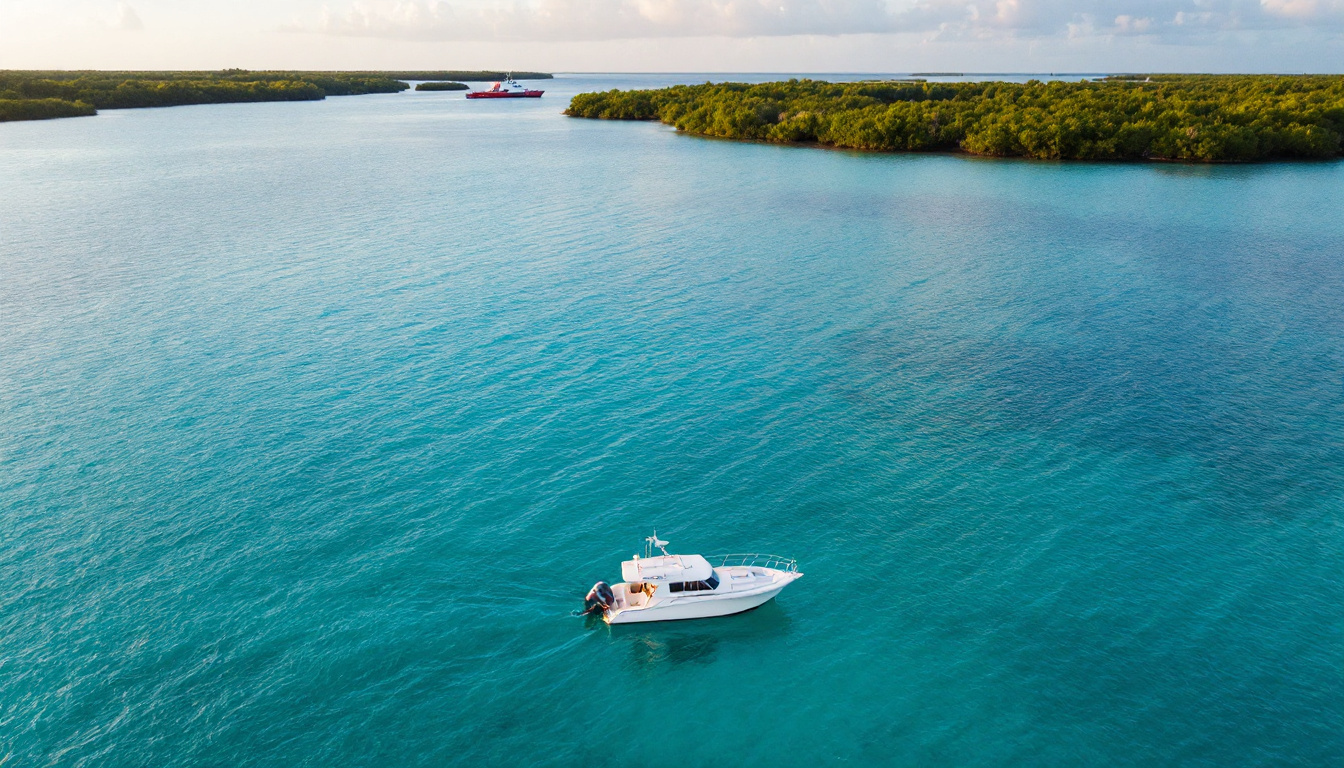
A 27-foot cuddy cabin vessel packed with 22 illegal immigrants — 13 of them Chinese nationals — was intercepted near Angelfish Creek, just off Key Largo, Florida, on September 15th. A CBP Air and Marine Operations enforcement aircraft spotted the boat. A Cuban national at the helm was arrested as the suspected smuggler.
Chinese nationals don't take Caribbean maritime routes. Until now.
That's the detail that should keep you reading. The standard pipeline for Chinese illegal immigrants into the United States has run through land crossings in California and Texas — the routes with established cartel logistics and guide networks. Maritime Caribbean routes are historically dominated by Haitians, Dominicans, and Cubans. So when 13 Chinese nationals show up crammed onto a boat normally used for those runs, the question isn't just "how did they get here." It's who arranged the new route, and why.
Andres Blanco, Executive Director of CBP Air and Marine Operations Southeast Region, called the attempted entry "extremely dangerous" and confirmed the interdiction demonstrated "the strength of our maritime partnerships and our commitment" to border enforcement. He added that "those who attempt these dangerous voyages face arrest, prosecution, removal" — and worse.
The remaining passengers included eight Ecuadorian nationals and one Dominican national. All were transferred to the U.S. Coast Guard Cutter Pablo Valent for processing. The vessel was seized.
Coast Guard Lt. Corryn Ulrich, commanding officer of the Pablo Valent, stated that "the U.S. border remains secure due to highly capable teams and coordinated interagency" operations, adding, "we remain ready to save lives and enforce federal law at sea."
Good. Because the timing on this one is worth noting.
President Trump is scheduled to meet with Chinese President Xi Jinping in Washington, D.C., on Thursday. Gordon Chang, Senior Fellow at the Gatestone Institute, has been sounding the alarm about exactly this kind of escalation. "Xi Jinping keeps on talking about going to war against us… and also he's preparing," Chang said. "So, this is a very dangerous period for us."
We spend so much political energy arguing about the southern land border — walls, fences, Title 42, remain in Mexico — that we forget the coastline is a border too. Florida has roughly 1,350 miles of it. And apparently, Chinese nationals have figured out that the same smuggling networks moving people from the Caribbean can move them from wherever they need to start.
The infrastructure argument the open-borders crowd has relied on for years — that maritime enforcement is already robust, that the real problem is only the Rio Grande — just took on water. Thirteen Chinese nationals on a 27-foot boat off Key Largo didn't use the southern border at all. They used the same route a fishing charter would.
Chang's warning about Xi preparing for conflict sits differently when Chinese citizens are physically arriving on Florida's coastline through smuggling channels that didn't previously serve Chinese migrants. Whether these 13 individuals were economic migrants, intelligence operatives, or something else entirely is a question CBP will have to answer. What we already know is the route exists now.
Thursday's meeting between Trump and Xi will cover trade, Taiwan, and military posture. Somewhere on the agenda — or conspicuously off it — is the question of why Chinese nationals are showing up in Caribbean smuggling boats with increasing frequency.
Thirteen people. One 27-foot boat. A route that wasn't supposed to be theirs.