
Forty-five percent of Michigan likely voters told pollsters they would not consider voting for a Muslim candidate for president. Forty-six percent said the same about an atheist. Seven percent drew the line at a Christian.
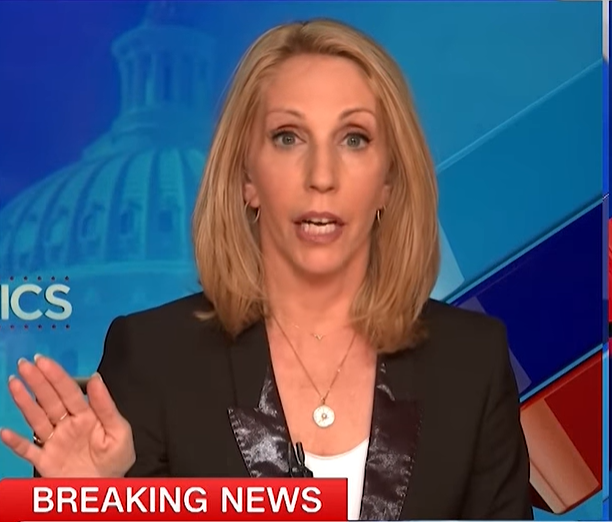
Dana Bash's response to the Muslim number, live on CNN: "It's just gross."
Not the number. Not the methodology. Not the geopolitical dynamics driving the sentiment. The voters. Gross.
The Washington Post and George Mason University's Schar School of Policy and Government conducted the poll from September 10 to 14 among 803 likely voters in Michigan, with a margin of error of 3.9 percentage points. The survey landed in the middle of a red-hot Senate race between Republican Mike Rogers and Democrat Abdul El-Sayed, who would become the first Muslim member of the U.S. Senate if elected.
El-Sayed leads Rogers 48% to 45% in the same poll — a three-point margin that falls within the margin of error. But the number that lit up CNN's set wasn't the horse race. It was the religion question.
And the breakdown tells the real story. Among respondents who said they wouldn't consider a Muslim president, 78% were Republicans. Twenty-two percent were Democrats. That's the part CNN doesn't want to discuss.
Bash landed on the figure and blurted "45%?!" before calling the finding "just gross." No curiosity about why voters feel that way. No interest in whether radical Islamist rhetoric, October 7, or the open hostility from groups like CAIR toward American values might be driving the sentiment. Just disgust — aimed squarely at the electorate.
The poll uncovered something else the El-Sayed campaign would rather not discuss. Eighty-three percent of Michigan voters who want Democrats to control the Senate said so clearly. But only 67% of those same voters said they'd actually back El-Sayed. That's a 16-point gap between party loyalty and candidate support — a gap that doesn't exist when the candidate isn't named Abdul El-Sayed.
Compare the religion numbers side by side. Forty-five percent won't consider a Muslim. Twenty percent won't consider someone Jewish. Seven percent draw the line at Christian. The gap between Muslim and Jewish is 25 points. Whatever's driving that isn't bigotry for bigotry's sake — voters are making specific distinctions based on specific concerns. Dismissing that as "gross" is how you lose Michigan.
The moment with Dana Bash is a perfect distillation of how corporate media processes information that contradicts the script. Step one: encounter the data. Step two: express moral revulsion. Step three: move on without asking a single follow-up question.
El-Sayed is running five points behind the generic Democratic ballot in his own state. That's not a polling artifact. That's voters telling you something specific about this specific candidate, and the specificity is the part that makes the newsroom uncomfortable.
Dana Bash called 45% of Michigan voters gross on national television. Those voters have a Senate race in November.
They also have a remote control.