
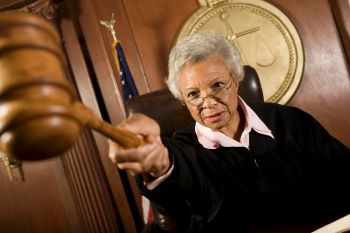
On Tuesday evening, the Justice Department's emergency lawsuit over 20,000 California ballots went to U.S. District Judge John W. Holcomb, a Trump appointee. A few hours later, it belonged to Judge David O. Carter, a Clinton appointee who in January accused the Trump administration of trying to "chip away at democracy."
The election is 13 days away.
The ballots began going out on October 1. Federal agencies cross-checked California's voter rolls against immigration records and flagged more than 20,000 registered voters as likely noncitizens, all of whom had already been mailed ballots. On October 15, the Justice Department sued, asking the court to order those ballots set aside until citizenship can be verified.
"Once illegally cast ballots are counted and commingled with lawful votes," the department warned in its filing, "the resulting harm may be impossible to remedy."
First Assistant U.S. Attorney Bill Essayli also issued a warning to the state's election officials. Under federal law, he said, "officials who knowingly tabulate unlawful ballots risk aiding and abetting a federal offense."
This week, the list produced its first charges. On Monday, the Justice Department charged 28 people from it, all legal permanent residents, with fraudulently registering to vote and lying on their naturalization applications. Officials say most of them cast illegal ballots.
California's answer has been to call the whole thing a "reckless political stunt." Gov. Gavin Newsom's press office took to X to mock Essayli, telling him to "brush up on your election law before tweeting" and suggesting the title "Second Assistant" might suit him better.
Then the state went after the courtroom.
When the Justice Department filed the case, it identified a related lawsuit, a voter-list case before Judge Mark Scarsi. California objected and pointed instead to United States v. Weber, the case in which the Justice Department had asked for California's voter rolls. Carter threw that case out in January, ruling that the state didn't have to hand the rolls over. He wrote that "state run elections mean that voters recognize their neighbors who staff polling stations," and that the department's request could have "a chilling effect" on immigrants.
Under a Central District of California rule, a judge who handled a related earlier case can agree to take over a new one. On Wednesday, Carter agreed. The case California wanted in front of him is now in front of him.
He has set a hearing on the Justice Department's request for October 27, one week before Election Day.
Meanwhile, ballots are being counted. In a court filing, Monica Flores of the Los Angeles County Registrar's Office admitted that her office "is not equipped or authorized to verify voter citizenship." Once a mail ballot's signature is verified, she said, it's separated from its envelope and mixed in with hundreds of thousands of others, which makes it nearly impossible to set aside. As of Tuesday, the county had already processed 331,000 ballots.
Essayli called the filing a "massive concession." California's system, he argued, simply takes voters at their word. People who register at the DMV swear under penalty of perjury that they're citizens, and no one checks. "American citizens' votes are being diluted in California," Essayli said.
The county says its staff reviewed 200 names from the federal list and found many canceled or inactive registrations, along with some voters born in the United States. Essayli's response: the county has "no way to verify anyone's citizenship status or their birthplace," so its numbers prove nothing. The 28 indictments filed Monday suggest which side of that argument the evidence favors.
California's main legal defense is that Congress never authorized the Justice Department to use the federal ban on noncitizen voting as a civil tool to force changes in how states run elections. The judge who will decide whether that argument wins already ruled that California didn't have to share its voter rolls with the federal government at all.
The Justice Department had until today, October 22, to object to the reassignment. It can also ask Carter to step aside, pointing to his own words about the administration.
On October 1, 20,000 ballots went to people federal agencies flagged as likely noncitizens. The county counting them says it can't check citizenship and can't pull ballots back once they're opened. By Election Day, the decision on whether any of those ballots get set aside will belong to a judge who said the Justice Department was chipping away at democracy for asking to see the voter rolls.