
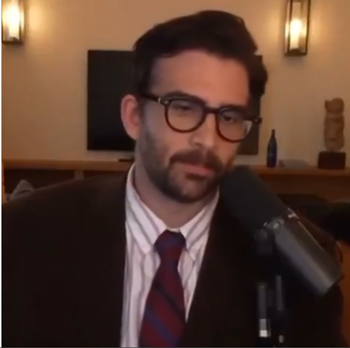
On August 21, at the Golden Gate Theatre in San Francisco, streamer Hasan Piker took the stage in a Mao jacket, flanked by co-hosts Will Neff, QTCinderella, and AustinShow, and led his audience in a meme song mocking the murdered conservative activist Charlie Kirk. The lyrics — "We are Charlie Kirk, we carry the flame. We'll fight for the Gospel, we'll honor his name" — weren't delivered in tribute. They were delivered to a cheering crowd.
Charlie Kirk, founder of Turning Point USA, called Piker a "socialist hypocrite" before he was assassinated. Piker's response, apparently, was to wait until Kirk couldn't respond at all — and then turn his death into a sing-along bit for a paying audience in one of America's most progressive cities.
Jonathan Turley, the George Washington University law professor and author of Rage and the Republic: The Unfinished Story of the American Revolution, broke down the incident on his blog. Turley didn't mince words about what the performance represented: "It is the very essence of this movement to desensitize people, particularly young people, to violence and hate."
That's worth sitting with for a second. This wasn't some anonymous troll on Twitter. This was a professional content creator with millions of followers, on a live tour, in a major theater, performing material built around the murder of a political opponent. And the audience didn't sit in uncomfortable silence. They sang along.
Turley also pointed to a broader pattern. He referenced Jennifer Welch, whom he described as a hate trafficker who had previously justified Kirk's assassination. He cited Florida Democratic Senate candidate Angie Nixon, who compared ICE agents to "modern-day slave catchers" and claimed the government is "literally trying to kill us." He pointed to Abdul El-Sayed, the political candidate who promised to "choke out" Republicans on the campaign trail.
None of these people were fringe accounts with twelve followers. They were candidates, commentators, and creators with platforms, audiences, and fundraising operations.
Turley framed the whole ecosystem with a line that cuts to the bone: "It is a narrative that allows you to speak like a Nazi while claiming to be fighting Nazis."
The predictable defense will be that it was comedy. Satire. A meme. Just a bit. That's the escape hatch that always opens when the backlash arrives — the performer was joking, the audience was in on it, nobody actually meant anything by it. Which is a curious standard to apply to a song mocking a man who was murdered for his political beliefs, performed in front of a crowd that found the murder funny enough to clap along to.
This is the same political culture that spent years warning us about "stochastic terrorism" — the theory that harsh political rhetoric from the right would inevitably lead to real-world violence. Entire media cycles were built around the idea that words have consequences, that dehumanizing language creates permission structures, that mockery of political opponents erodes democratic norms. We were told this was an existential threat to the republic.
Apparently the theory only applies in one direction. A conservative gets assassinated, and within weeks his death becomes a touring comedy bit. The people who lectured the country about the dangers of violent rhetoric are singing along in the front row.
Piker wore a Mao jacket to the show. Mao Zedong — responsible for the deaths of tens of millions — reduced to a fashion statement on a stage where political murder is the punchline. That's not irony. That's the whole thesis, dressed up in merch and ticket sales.
The market for rage has never been stronger. And right now, business is booming.