
On November 5, 2009, Army Major Nidal Malik Hasan walked into a medical processing building at Fort Hood where soldiers were lined up for immunizations and deployment clearances. He shouted "Allahu akbar," pulled a laser-sighted handgun, and opened fire — chasing fleeing soldiers into the parking lot. Thirteen dead. Thirty-two wounded.
His execution is scheduled for 1:00 PM on December 3. That's the same hour he started shooting.
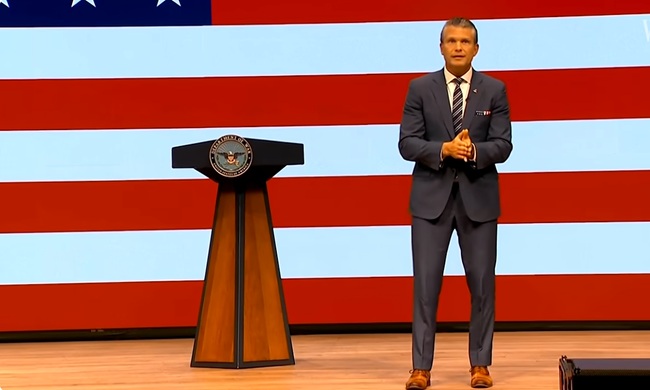
Defense Secretary Pete Hegseth made the announcement this week, and he wasn't interested in softening it. "Execution by firing squad," Hegseth said. "An Army major betrays his country, radical Islamist, kills a bunch of Americans at Fort Hood." The execution will take place at Fort Hood itself — the same ground where Hasan murdered his fellow soldiers seventeen years ago. Soldiers with rifles.
President Trump approved the method. Hegseth confirmed it will be public. "We'll make sure that people are able to watch it, that it's public," he said, per Conservative Review.
This will be the first military execution since Army Private John A. Bennett was hanged on April 13, 1961. The last military firing squad dates back to the 1940s. The Pentagon confirmed the execution will be livestreamed, with additional details forthcoming.
Hasan, a former Army psychiatrist, claimed his massacre was meant to stop soldiers from deploying to Afghanistan. The military judge at his 2013 court-martial barred that stated motivation as a defense. Hasan fired his own lawyers, represented himself, admitted to being the gunman in his opening statement, called no defense witnesses, and rested his case without a closing argument. The trial lasted three weeks.
He's now paralyzed from the waist down and uses a wheelchair. Leaked documents showed Hasan believed he could "still be a martyr" if executed.
When asked about Hasan's final requests, Hegseth had three words: "Don't care. We'll see him on Dec. 3."
The usual objections surfaced immediately. Yale Law lecturer Eugene R. Fidell suggested the legal process "might outlast the current administration, and who knows if the next one will have the same penchant for executions." That's the play — delay until someone less committed takes office. It worked for seventeen years under administrations that treated Hasan's death sentence like an inherited piece of furniture nobody wanted to move. The appeals sat. The sentence collected dust. Thirteen families waited.
The execution is set for the place where it happened, at the hour it happened, by the method that makes the consequence unmistakable. Firing squad. Public. December 3.
Thirteen soldiers went to a routine medical appointment that morning in 2009. Hasan had a career, a pension track, and a uniform. He used all of it to get close enough to kill them.