
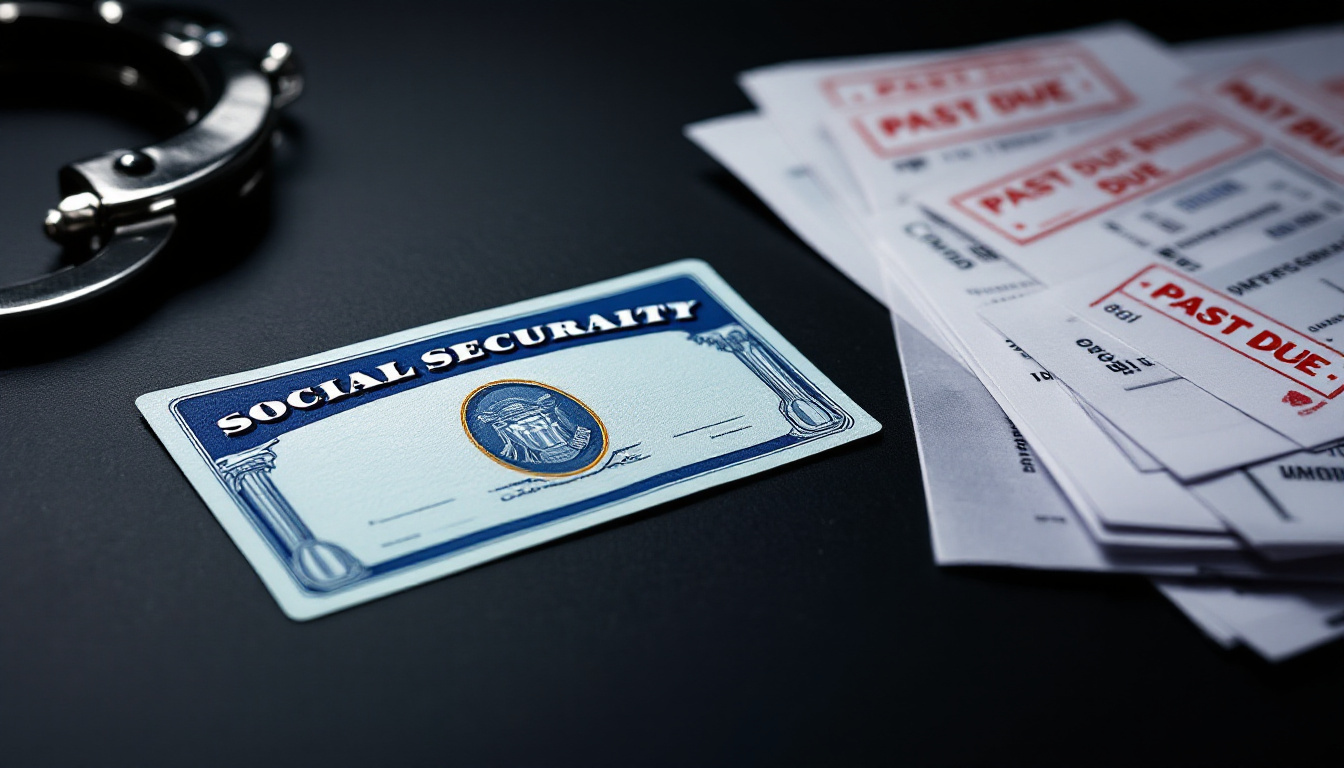
Verónica Espinosa-Cortés walked into a Daniel's Jewelers in June 2024, picked out $1,000 worth of merchandise, and charged it to a credit line she opened with someone else's Social Security number. The credit limit on that stolen identity was $3,717. She wasn't done shopping.
Espinosa-Cortés is a Mexican national. An immigration judge ordered her removed from the United States in 1996. Thirty years later, she was still here — buying jewelry with a stolen American's credentials.
Federal prosecutors in the Central District of California have now charged five illegal aliens with fraud in connection with access devices over $1,000. The defendants — four Mexican nationals and one Guatemalan — allegedly used stolen Social Security numbers to open credit accounts, rack up $140,000 in combined debt, and then file for bankruptcy between February and May 2025 to erase the balances. The Americans whose identities were stolen got the wrecked credit scores. The defendants got Bass Pro Shop cards with $6,000 limits and Best Buy accounts and PayPal lines worth $6,250.
Abel Ávila Martínez, 48, of Buena Park, allegedly accumulated $15,964 in fraudulent debt. He was previously removed from the U.S. in 1999 and came back. He bought a $1,185 guitar in January 2025 using a stolen identity. Walter Anastacio Castellanos-Pérez, 53, a Guatemalan national from Rancho Dominguez, allegedly ran up $32,961 — including a $1,206 appliance purchase in May 2023. José Alfredo Chávez-Cabello, 54, of Long Beach, allegedly racked up $19,153. Moisés Ortuño-Claras, 47, of Anaheim, topped them all at $63,974 in fraudulent debt, including $3,522 in purchases in December 2024 alone.
Ortuño-Claras is still being searched for.
Bill Essayli, First Assistant U.S. Attorney, laid out the stakes: "These defendants allegedly exploited both our financial system and the bankruptcy process and face up to 15 years in federal prison if convicted."
The scheme worked like this: steal Social Security numbers from Americans, open credit accounts in their names, spend freely, then file bankruptcy petitions in U.S. Bankruptcy Court for the Central District of California to discharge the debt. The victims wouldn't know until a collections call arrived or a mortgage application got denied. By then, the accounts were in default and the bankruptcy filings had muddied the trail.
Peter Anderson, U.S. Trustee for Region 16, made the federal posture clear: "We appreciate the commitment of the U.S. Attorney's Office and our law enforcement partners to ensuring that bankruptcy is not a safe haven for fraudsters."
Two of the five defendants had already been formally removed from the country and came back. Espinosa-Cortés was ordered out in 1996. Ávila Martínez was removed in 1999. Both returned, obtained other people's Social Security numbers, and lived on borrowed American identities — literally.
Five defendants. Four already in custody. $140,000 in stolen credit. Fifteen years maximum per conviction. One is still out there with someone's Social Security number.