
Twelve out of every 100 students in Italian schools are foreign nationals. In some classrooms, the majority don't speak Italian. This week Italy's Prime Minister Giorgia Meloni walked to a podium at Palazzo Chigi in Rome and said what every parent in those classrooms was already thinking.
"If the number of children who don't understand the language becomes large — or even the majority — that is no longer integration; it is neglect."
Meloni, leader of the Brothers of Italy party and the longest-serving uninterrupted Italian prime minister since World War II, announced a package of education reforms that would ban face coverings in schools, cap the number of foreign students per classroom, and require mandatory Italian language instruction for non-native speakers. The announcement drew a standing ovation.
The foreign student population across Italian schools now sits at 11.6 percent nationally. That number doesn't distribute evenly. In urban classrooms, particularly in northern industrial cities, entire classes can be composed mostly of students who arrived without speaking the language. Meloni's reforms target that imbalance directly — not by removing students, but by distributing enrollment so that integration actually functions.
"If there is only one child in a class who doesn't understand Italian, that child will likely be able to learn the language and integrate quickly with the help of classmates and teachers," Meloni said. "However, if the number of children who don't understand the language becomes large — or even the majority — that is no longer integration; it is neglect."
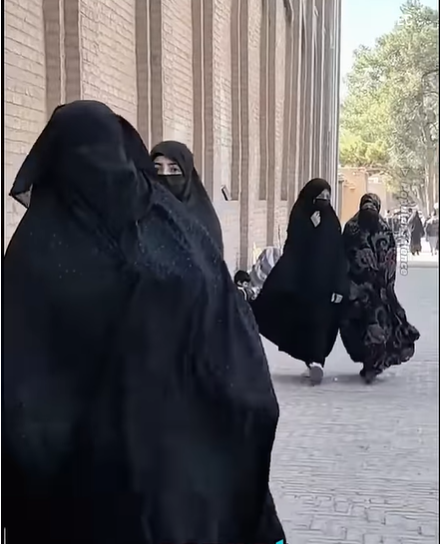
The face-covering ban landed harder. Meloni didn't frame it as security policy or dress code enforcement. She framed it as a declaration about who Italy is.
"You must go to school with your face uncovered, and in Italy no one, in the name of a real or supposed tradition, can decide that a young woman must hide herself."
That's a female head of state telling her country that cultural submission disguised as tolerance won't fly in Italian classrooms. The reforms now go to the Italian parliament, which has 60 days to approve them.
Meanwhile, back in America, school boards spend emergency sessions debating whether biological males should compete in girls' track. University administrators issue land acknowledgments before faculty meetings. A public school in Virginia made national news last year for hiding a student's gender transition from the child's own parents. We can't agree on whether kids should learn to read using phonics or feelings.
Meloni said anyone who comes to Italy "must learn our language, understand our culture, and respect our rules." She received a standing ovation for that line. In an American school board meeting, that sentence would trigger a Title VI investigation.
The Italian model isn't complicated. Teach the national language. Don't allow girls to cover their faces or eyes. Integrate or don't enroll. It doesn't require a 400-page equity framework or a DEI coordinator making $180,000 a year. It requires a leader who believes the country's culture is worth preserving — and says so out loud, without a PR team softening the edges.
The reforms still need parliamentary approval within the 60-day window. But Meloni's coalition holds the majority, and her domestic approval numbers explain why.