
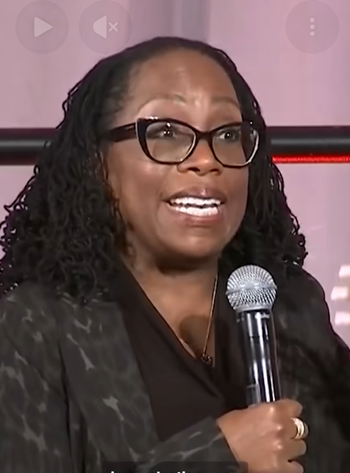
Supreme Court Justice Ketanji Brown Jackson sat down to explain the sacred importance of judicial neutrality. She chose to do it on "IMO with Michelle Obama and Craig Robinson" — the Spotify podcast hosted by the former First Lady whose husband nominated three liberal justices.
The episode, recorded in May 2026 and debuted this week, is titled "Move Through the Hard Times With Ketanji Brown Jackson."
"There are lots of limits on what judges can do, and I try to be very, very mindful and scrupulous with respect to that because, as you say, our obligation is to be unbiased in our approach," Jackson told Obama and her brother Craig Robinson on the podcast.
She continued: "And, so, you have to then navigate all the sources that could make for an appearance of partiality, which you want to avoid."
The irony was immediate and total. A sitting Supreme Court justice chose the podcast of one of the most politically active families in Democratic Party history to deliver a lecture on avoiding the appearance of partiality. The appearance was the whole point.
Jackson's track record on the bench doesn't exactly scream "scrupulous neutrality" either. Justice Amy Coney Barrett, in a 2025 rebuke, wrote: "We will not dwell on Justice Jackson's argument, which is at odds with more than two centuries worth of precedent, not to mention the Constitution itself." That was over the birthright citizenship case.
Justice Samuel Alito, in May 2026's Louisiana v. Callais decision, described Jackson's dissent as "baseless and insulting" with rhetoric that "lacks restraint."
Justice Clarence Thomas, back in the 2023 affirmative action ruling, criticized what he called Jackson's "race-infused world view."
Three separate colleagues. Three separate cases. Three separate warnings that her judicial philosophy runs on something other than neutral legal analysis. "You really have to be focused on that," Jackson told the podcast audience about staying impartial.
This is a justice who was nominated by Joe Biden after he publicly stated he would select a Black woman for the seat — a selection criterion based entirely on race and gender. That's the biographical backdrop to a podcast appearance about how judges must avoid even the "appearance of partiality."
The venue choice tells you everything the words don't. There are a hundred platforms where a Supreme Court justice could discuss judicial philosophy. Law school lectures. C-SPAN. Published writings. Jackson picked the one hosted by the wife of the president who built the liberal wing she now sits on, broadcast on Spotify between episodes about wellness and personal branding.