
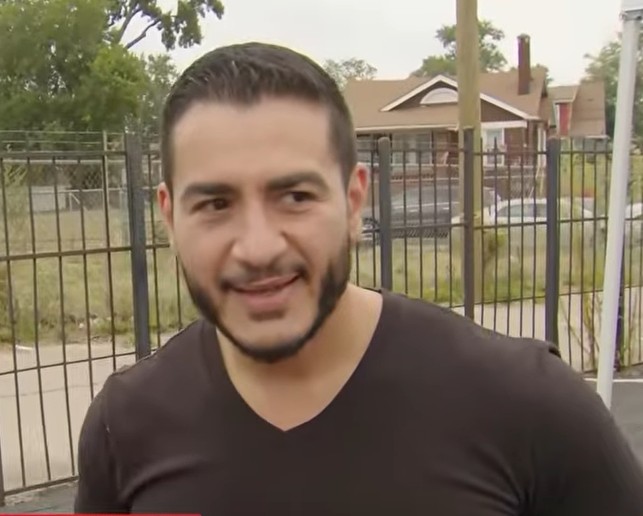
Abdul El-Sayed, the Democratic nominee for Michigan's U.S. Senate seat, once wrote an essay arguing that breast cancer research funding reflects the "social power and privilege" of the women most likely to get the disease. The essay, titled "The Pink Ribbon Lobby and Everyone Else," called the level of federal funding directed toward breast cancer research "disturbing."
One in eight American women will be diagnosed with breast cancer. Forty-two thousand die from it every year.
The Washington Free Beacon unearthed the 2012 essay earlier this week, and the fallout has been swift. El-Sayed didn't just question whether research dollars were optimally allocated — a defensible, if bloodless, policy discussion. He went further. He argued that breast cancer advocacy groups had created the false impression that women were "in imminent danger" from the disease. The framing wasn't clinical. It was ideological: the women getting cancer had too much social power, and their power was warping where the money went.
Fox News host Laura Ingraham, herself a breast cancer survivor, responded on Thursday. "As a BREAST CANCER SURVIVOR, I can't get past his argument that research funding may reflect the 'social power and privilege'" of those most likely to contract the disease, she wrote. Ingraham noted that breast cancer remains the second-leading cause of cancer death among American women — about 1 in 43 women will die from it. Not a hypothetical danger. Not a lobbying talking point. A body count.
Republican Mike Rogers, El-Sayed's opponent and himself a cancer survivor, launched a six-figure digital ad buy across Michigan hammering the comments. The ad doesn't mince around the edges: "What is wrong with Abdul El-Sayed? As a cancer survivor, Mike Rogers will stand with Michigan women." The numbers Rogers cites are specific to the state — 9,900 Michigan women diagnosed with breast cancer every year, 1,350 who don't survive it.
The academic language in El-Sayed's essay does the work that a campaign attack ad never could. When you write that the problem with breast cancer funding is the "social power and privilege" of the patients, you've told every woman who ever sat in an oncologist's waiting room that her disease got too much attention because of who she is. That's not a policy critique. That's a worldview — one where even dying of cancer can be reframed as an expression of unearned advantage.
El-Sayed has never held a medical license or treated patients, despite his public health credentials. He ran for governor of Michigan in 2018 on a Medicare for All platform and lost in the Democratic primary. Chuck Schumer's PAC has been bankrolling his current Senate bid, betting that Michigan's blue-leaning electorate would overlook the ideological baggage. The breast cancer essay suggests the baggage is heavier than advertised.
Nine thousand nine hundred Michigan women a year get that diagnosis. El-Sayed called the funding that fights for them "disturbing."