
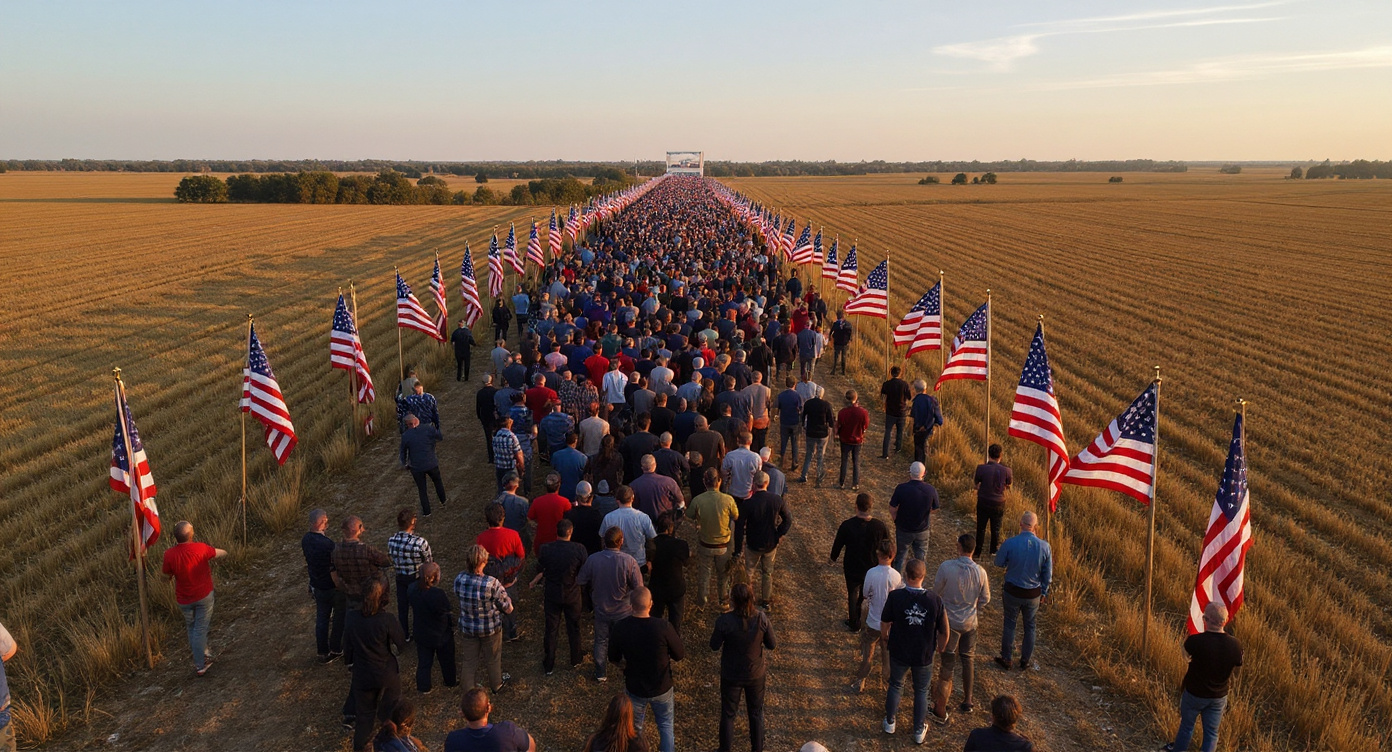
In Grand Island, Nebraska, over the weekend, the line to see President Trump stretched so far that people at the back couldn't see the venue. Not the stage — the building. Attendees posted photos of a crowd snaking through fields and parking lots in a scene that looked less like a midterm rally and more like the 2016 movement all over again.
Emerson College Polling says Democrats lead Republicans 53% to 42% on the generic congressional ballot.
That eleven-point gap comes from a September national survey of 1,000 likely voters with a credibility interval of plus or minus three points. The same survey found that 71% of likely voters were "very excited" to vote, with another 20% "somewhat excited." Over 90% combined enthusiasm — numbers that suggest the electorate is anything but checked out. The question is whether that energy is flowing the direction Emerson thinks it is.
The Nebraska rally wasn't an isolated event. On October 3, Trump drew similar scenes in Ohio. Before that, Oklahoma. WLT Report described the Grand Island turnout as "one of the longest Trump rally lines seen in years." These aren't swing-state photo ops in carefully staged gymnasiums. Grand Island, Nebraska has a population under 54,000. People drove hours to stand in line for more hours in early October.
Polling firms survey 1,000 people by phone and declare the race settled. Meanwhile, tens of thousands of people are physically showing up, burning vacation days, driving across state lines, standing in weather — and that behavioral data doesn't make it into a single crosstab.
The generic ballot is a blunt instrument. It asks voters which party they prefer for Congress without naming candidates, without accounting for district-level dynamics, and without measuring intensity. A voter who "leans Democrat" and a voter who drove four hours to stand in a Nebraska field both count as one unit of support. The poll treats them identically. The midterm won't.
Emerson's own enthusiasm numbers undercut the top-line result. When nine out of ten likely voters say they're excited to vote, the deciding factor isn't preference — it's turnout. And turnout is the one variable that rally lines measure better than phone surveys. The people standing in Grand Island aren't "somewhat excited." They're not answering a survey between bites of dinner. They're committed at a level that doesn't fit neatly into a credibility interval.
The polling industry has a pattern here. In 2016, state-level surveys missed Trump's margins in the Rust Belt. In 2020, national polls overestimated Biden's lead by the widest margin in decades. In 2024, the same firms undercounted Trump support again. Each cycle, the explanation is the same: "shy" Trump voters, response-rate bias, education-weight adjustments that arrived one cycle too late. The methodology keeps getting revised. The direction of the error never changes.
What's conspicuously absent from the Emerson release is any mention of rally attendance, event density, or grassroots mobilization metrics. Those aren't traditional polling inputs. But when one side is generating overflow crowds in rural Nebraska while the other side is generating margin-of-error leads in national surveys, the gap between measured sentiment and observable behavior is worth noting.
That September survey sampled 1,000 likely voters. Over the past three weekends, Trump has drawn more than that to a single rally — in states that aren't even competitive. Emerson counted opinions. Grand Island counted shoes on the ground.