
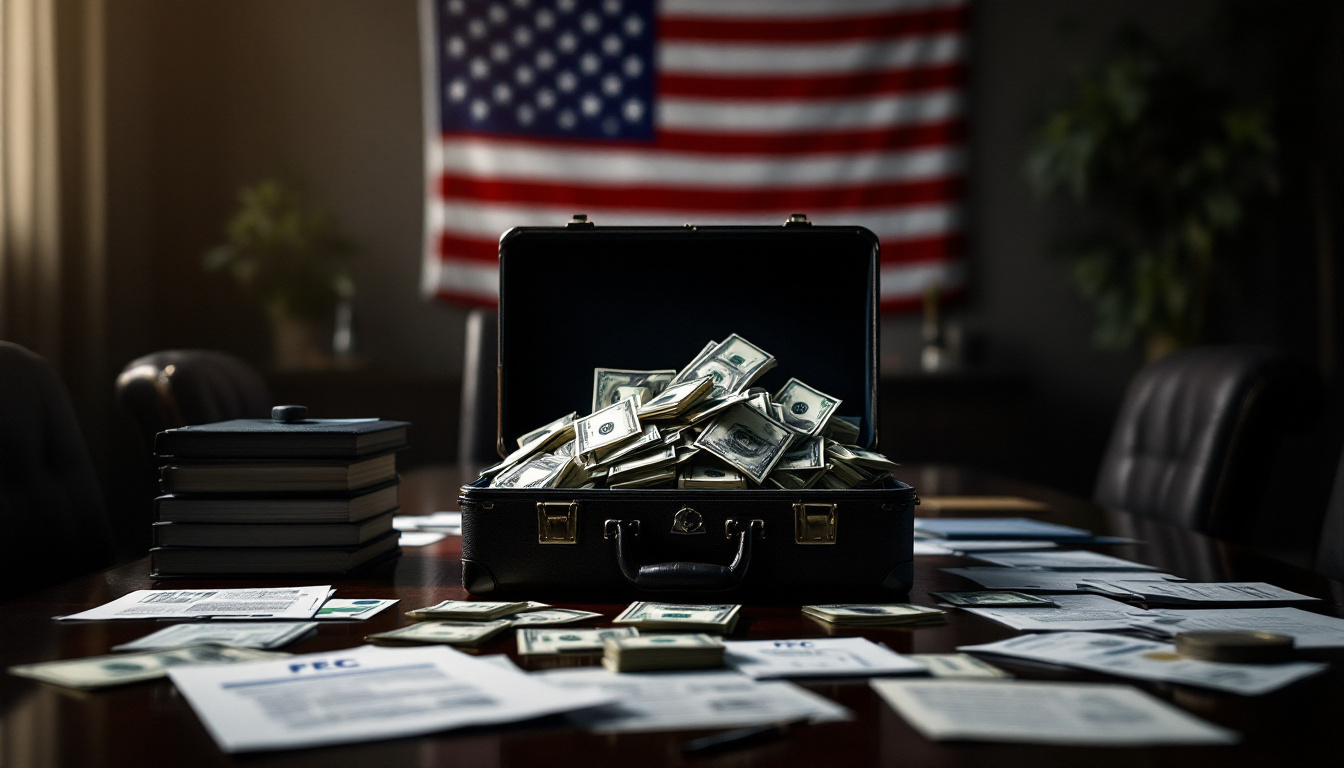
Three weeks before Election Day, a super PAC nobody had ever heard of materialized out of thin air and started carpet-bombing Republican candidates with robocalls, text messages, and mailers. The attacks hit GOP candidates on guns, abortion, and immigration — not from the left, but from the right. The pitch to voters: these Republicans aren't conservative enough, so vote for the Libertarian instead.
The price tag was $8.5 million.
CNN's Andrew Kaczynski, reporting under the KFILE banner, broke down the operation. As Kaczynski wrote, "Three weeks before Election Day, a mysterious super PAC emerged and spent more than $8.5 million attacking Republicans." The PAC had no public footprint, no website, no social media presence, and no prior spending history with the FEC. It appeared, spent millions, and vanished — all timed to land after the final pre-election disclosure deadline, so voters couldn't trace the money before casting their ballots.
The strategy was surgical. Rather than running ads for Democratic candidates, the PAC boosted little-known Libertarian and third-party candidates as the "real conservative" alternatives. The messaging was designed to peel off just enough right-leaning voters to flip the margin. In several tight House races, third-party vote totals exceeded the Republican candidate's margin of defeat. That's not a coincidence — that's a targeting operation.
DataRepublican, the research outfit that first flagged the spending patterns, confirmed the trail. The financial filings traced back to an accountant in Salt Lake City — a dead end designed to look like a beginning. No donor names. No organizational history. Just a shell moving $8.5 million into competitive Republican districts at the exact moment it would do maximum damage.
The "conservative" branding is the tell. Actual conservative organizations don't hide their donors, pop up three weeks before an election, and then disappear. They build lists, run candidates, and put their names on things. This operation did the opposite — it existed solely to create confusion among right-leaning voters who might skip the Republican if they thought a more conservative option was available. The audiences targeted weren't swing voters. They were reliable conservatives being told their own candidate had betrayed them.
The timing exploited a specific weakness in federal campaign finance law. By launching after the final pre-election disclosure window, the PAC ensured that no donor information would be publicly available until well after votes were counted. By the time anyone could follow the money, the races were already decided.
Twitchy's coverage pointed to what makes this different from ordinary political spending: the deliberate impersonation of conservative identity to suppress conservative turnout. This wasn't a Democratic PAC running attack ads. This was an operation wearing a conservative mask, speaking conservative language, and using conservative voters' own principles against them.
Several of the House races where this money landed are now settled — with Democrats holding seats where the third-party vote exceeded the Republican's margin of loss. The PAC that made it happen has gone dark. The accountant in Salt Lake City isn't returning calls.
Eight and a half million dollars. No donor names on the public record. And every dime spent making sure Republicans lost to candidates the PAC never intended to elect.