
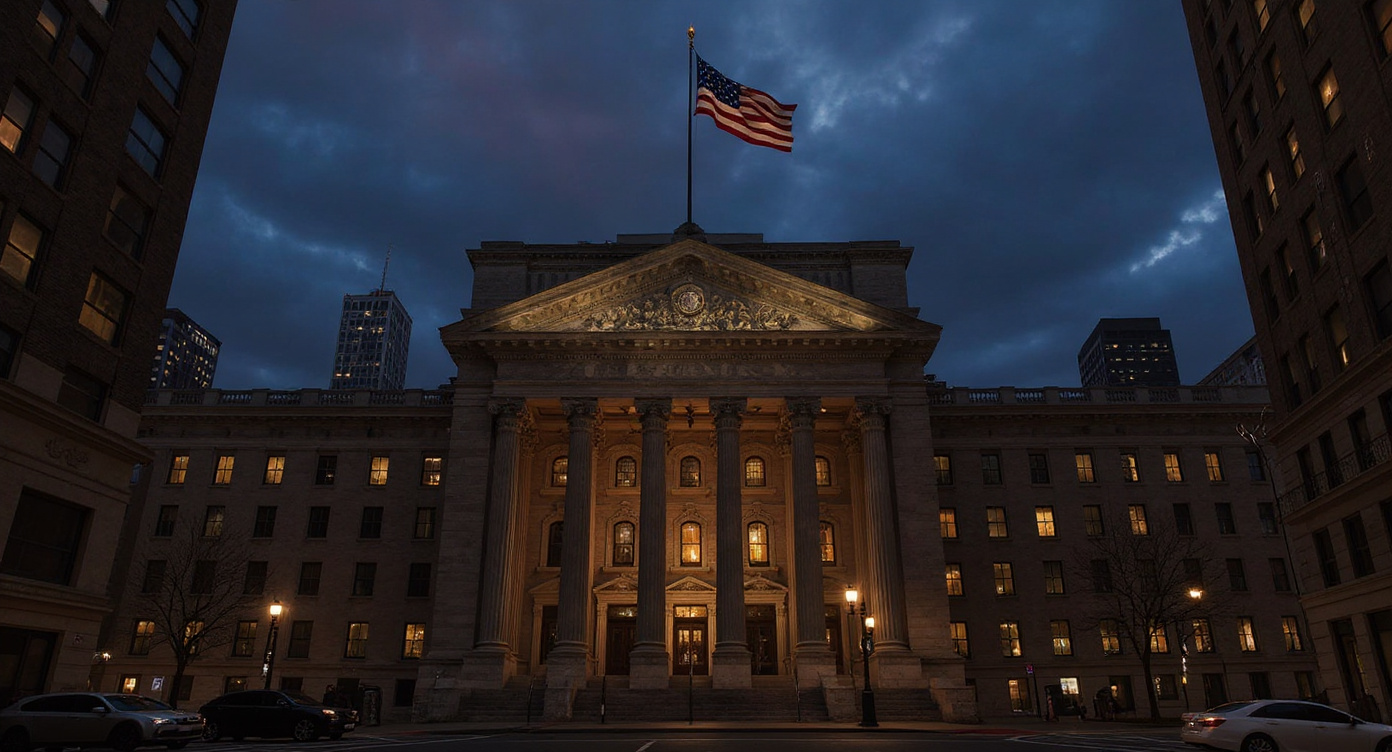
New York City Mayor Zohran Mamdani stood in front of cameras last Thursday and responded to a 6-3 Supreme Court ruling on Temporary Protected Status with six words no mayor should ever say out loud: "something that we will not ever accept."
The ruling he won't accept is the law of the land. The court he's defying is the highest one we've got.
The Supreme Court's decision upheld the federal government's authority under 8 U.S.C. §1254a(b)(5)(A) to terminate Temporary Protected Status for Haitian and Syrian nationals, a program originally established in 1990. The ruling strips legal status from an estimated 350,000 migrants nationwide, including roughly 40,000 in New York City alone.
Mamdani didn't hedge. In a video statement and formal press release from City Hall, he called the ruling cruel and made his position explicit. "When we think about — especially what Haitian New Yorkers have had to deal with — it is not only cruel — it is something that we will not ever accept," he said. He followed that with a direct promise to affected migrants: "You will not face this cruelty alone. This administration will stand alongside immigrant New Yorkers today, tomorrow, and every day that follows."
The mayor pointed to New York's existing sanctuary framework as his enforcement mechanism. Back in February, Mamdani signed an executive order that prohibits ICE from entering city property — public schools, homeless shelters, hospitals — without a judicial warrant. The order also directed audits of city agencies for sanctuary compliance and mandated training for city workers on sanctuary laws.
Here's what none of that does: override a Supreme Court ruling. Sanctuary policies can make ICE's job harder by cutting off local cooperation. They cannot nullify a 6-3 decision from the bench. Mamdani's executive order governs city employees and city facilities. Federal agents operating on federal authority within city limits don't answer to the mayor's office.
Mamdani wasn't alone on the microphone. Rep. Rob Menendez, Democrat of New Jersey, claimed "this administration wants to create the largest undocumented population that it possibly can, to fulfill Stephen Miller's mission of deporting and removing as many people as possible." Rep. Melanie Stansbury, Democrat of New Mexico, added that "the Supreme Court sided with an administration that is seeking to strip away the basic human rights, protected under international law, for hundreds of thousands of American families."
Neither explained which "basic human right" includes permanent residency in a country you entered under a temporary program. The word "temporary" is right there in the statute.
The most interesting response came from inside the house. Senator John Fetterman of Pennsylvania — a Democrat — went on Kayleigh McEnany's show and didn't mince words. "I haven't seen the freak-out now that the mayor of New York is now saying I'm going to defy the Supreme Court ruling," Fetterman said. He noted that "many of the members in my party are not calling him out" and are instead defending him, warning that "when you have the leader of the country's largest city saying we're not going to follow or honor what the Supreme Court says" — that's a constitutional crisis.
Fetterman is right, and the silence from his party proves his point. When the Trump administration was accused of slow-walking court orders, every editorial board in the country ran fever-pitch columns about the rule of law. A Democratic mayor announces on camera he won't accept a Supreme Court ruling, and the reaction from those same editorial boards is a polite cough.
New York City has 8.5 million residents and more than 3 million foreign-born. The mayor governs a city that runs on immigrant labor and federal money. The same federal government whose highest court just issued a ruling the mayor says he'll ignore.
The TPS statute has been law for 36 years. The Supreme Court ruled 6-3 that the executive branch has the authority to end it. The mayor of a city that can't fill its own potholes says he'll stand in the way.
That's not solidarity. That's a press conference.