
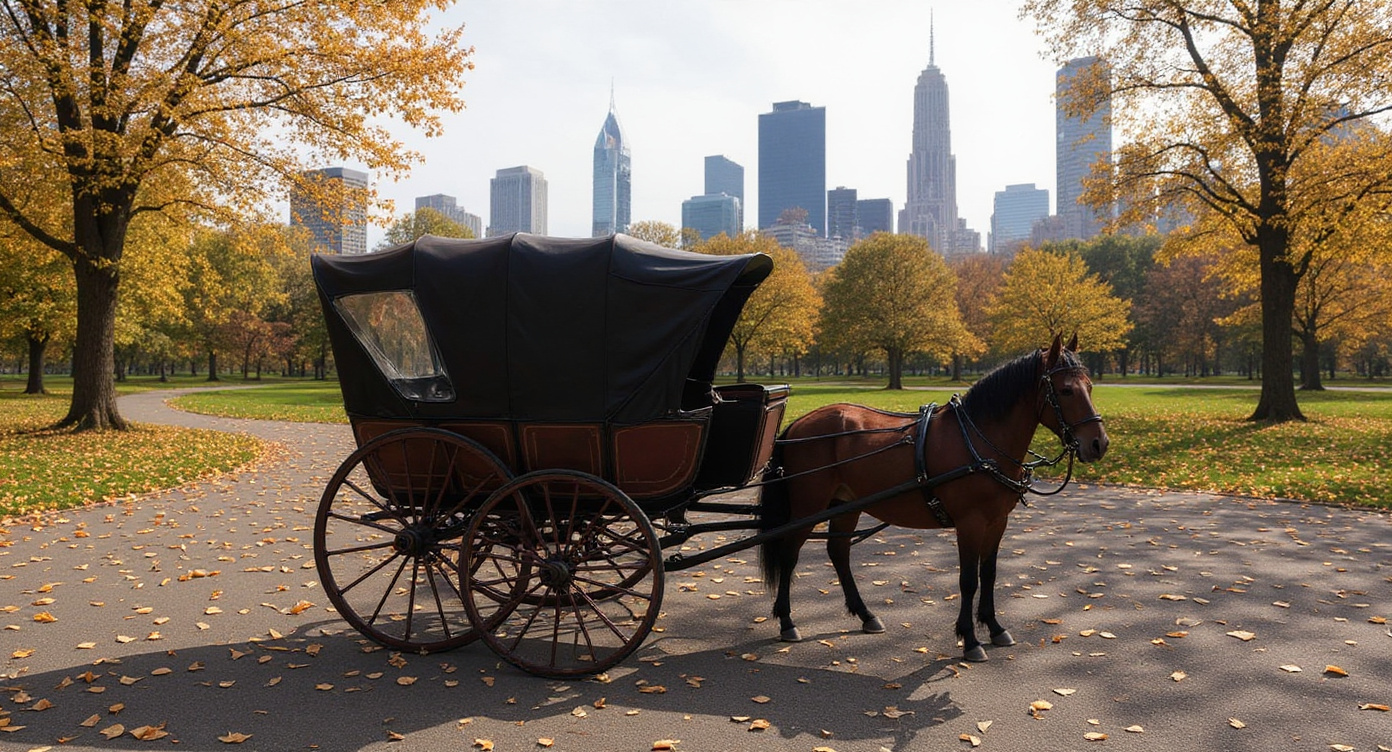
Frank Riccobono owns twelve horses and three carriages. His father drove a horse carriage through Central Park for forty-seven years. Frank himself has been doing it for more than twenty. He paid nearly $400,000 for the medallion that lets him operate legally in New York City.
Next Wednesday, the City Council is expected to vote to make all of that worthless.
Mayor Zohran Mamdani and City Council Speaker Julie Menin announced a deal last week to ban horse-drawn carriages in New York City, phasing them out entirely by June 2028. The bill, which already has 29 of the Council's 51 members signed on as co-sponsors, is called "Romanch's Law" — named after Romanch Mahajan, the eighteen-year-old tourist from India who died on June 17 after a carriage horse bolted in Central Park and the vehicle overturned. A medical examiner ruled his death blunt force trauma from hitting the pavement. It was the first fatality in the industry's 168-year history.
One death in 168 years. That's the safety crisis justifying the destruction of approximately 200 people's livelihoods, 160 horses' working homes, and an industry older than the Brooklyn Bridge.
Speaker Menin framed the ban as common sense. "We can honor our city's traditions while recognizing when it's time to move forward in the interest of public safety, protecting workers, and strengthening our city's economic vitality," she said. She added that horse-drawn carriages had become "a growing public safety liability."
A growing liability. One fatality in a century and a half. Pedicabs fly through those same park roads every day and nobody's banning them. Frank Riccobono made that exact point to Fox News Digital. "You have pedicabs flying around, so why are they permitted to have a business?"
The drivers weren't consulted. Christina Hansen, a veteran carriage driver and Transport Workers Union Local 100 shop steward, told Fox News Digital that drivers have yet to hear directly from Mamdani. "He hasn't and he probably won't, because he'd get so much blowback on social media or whatever," she said. The self-described progressive mayor who campaigned on workers' rights can't be bothered to face the workers he's putting out of business.
Hansen had another observation that cuts to the core of this whole charade. "The only cruelty in the New York City carriage industry has always been the way that the people in it are treated."
Natalie Riccobono, Frank's wife, put it in terms the Council apparently can't process. "By taking away these businesses from us, they are literally taking food off of our table and possibly a shelter from over our heads."
The bill includes no reimbursement for medallion holders who invested hundreds of thousands of dollars. Frank Riccobono told Fox News Digital what that means for his family: "I am going to take a very, very big loss here and there's no reimbursement in this bill." He has a father with medical conditions who depends on the business. "But they're trying to strip this away from us."
Mamdani, for his part, offered the kind of sentence politicians use when they know they're about to hurt people. "I think that we have a civic responsibility to ensure that we are not leaving anybody out to dry." The bill contains a deadline of April 1, 2027, for a "workforce transition plan." No dollar figures. No guarantees. Just a deadline for a plan about a plan.
Animal rights group NYCLASS and its executive director Edita Birnkrant have pushed for this ban for years. Former Mayor Bill de Blasio tried and failed to do the same thing. Mamdani succeeded where de Blasio couldn't — not because the argument got better, but because one terrible accident gave the activists the emotional leverage they needed.
Driver Jill Adamski captured what this feels like from inside the carriage. "I feel pretty betrayed. We were told the bill would get amended to actually do something for us drivers and horses. It was not. I'm concerned. I don't know how I will possibly earn enough money to care for my horses. I developed a bond with them, so they don't want to be separated from me."
The horses, under the bill, can be kept, sold, or transferred — but not sent to slaughter. A humane provision for the animals, paired with zero financial protection for the human beings who built their lives around caring for them. That's what Mamdani's "civic responsibility" looks like on paper.
The Council votes October 22. Twenty-nine co-sponsors. Two hundred drivers. Nearly $400,000 per medallion. No reimbursement in the bill.
Frank Riccobono said he wanted his investment to stay for the next twenty years, fifty years, a hundred. His father gave the industry forty-seven.