
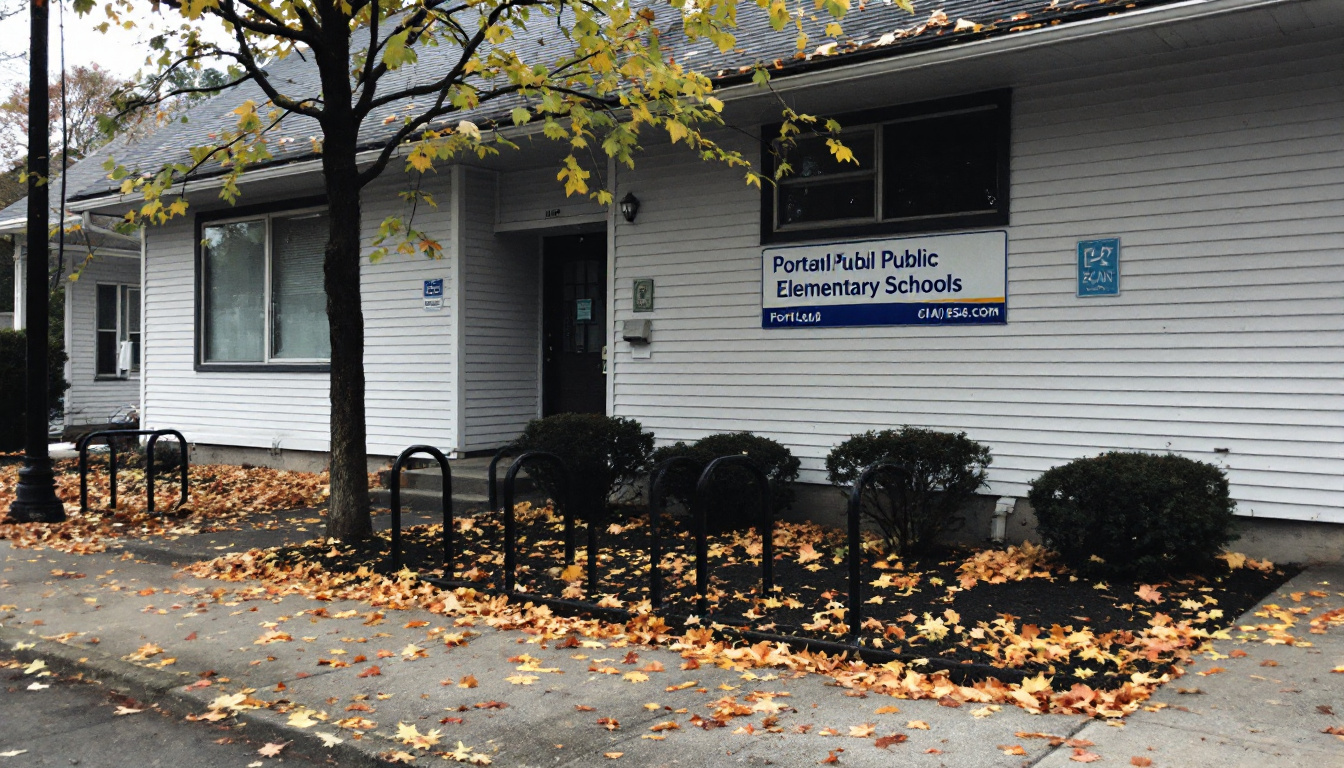
A teacher at Ocean Avenue Elementary School in Portland, Maine wanted to foster puppies in her classroom. The kids would read to them, play with them during breaks, they helped the kids calm down when they got overwhelmed and helped shy kids come out of their shells. Instead of a permission slip, the teacher got a policy review.
The reason: dog saliva is considered ritually impure in Islam.
Dr. Abdullahi Ahmed, Portland Public Schools' assistant superintendent for student, family, and community partnerships, instead of approving the teacher's request actually tried to get dogs and other animals BANNED from his school district. The meeting was supposed to review IMG — the district's classroom pets policy. It became something else entirely.
Ahmed told the committee he had consulted with "multiple imams in the Muslim community" before the discussion. He explained the theological objection plainly enough: "So for example, the dog saliva is considered impure." Not a health concern. Not an allergy issue. A religious purity rule, applied to a public school classroom in the United States.
He then laid out what the new policy framework should look like. "Students and staff should not be required to interact whatever policy we make and we're not talking only students we have also staff," Ahmed said, proposing that dogs be kept in separate rooms under an opt-in model. Teachers who wanted classroom dogs would essentially need to quarantine them from anyone who might object on religious grounds.
Ahmed tried to wrap his demand in silk with this, "The Muslim community members do not oppose or hold hostility against animals because that is — we need — I want to make sure that this things are cleared fast." Oh, good, the Muslim community promises they don't hate dogs. They just believe dogs are ritually unclean and want the public school system to organize itself around that belief.
Watch the scene for yourself. Note Ahmed delivers his request to ban dogs at schools in front of Iraq flag. Ahmed is a Somali immigrant so putting up the flag of not his country of origin, or the flag of the country that took him in is another sign.
Here's what makes this worth paying attention to. Nobody on that committee asked the obvious question: why is a public school district consulting imams to set classroom policy?
Portland isn't debating whether to put a crucifix in the cafeteria. Nobody's asking a rabbi whether the lunch menu complies with kosher law. A teacher wanted to bring puppies into a reading program — something schools across the country do without incident — and the district's response was to convene a policy review anchored to Islamic jurisprudence on ritual purity.
The opt-in model Ahmed proposed sounds reasonable on paper. In practice, it means a teacher has to segregate her classroom around a religious objection to an animal. The dog goes in a separate room. Students who want to interact have to actively choose in. The default position becomes: dogs are excluded unless you jump through hoops to include them. The religious objection wins by default.
And the framing tells you everything. Ahmed didn't present this as one parent's concern. He presented it as community input, backed by consultations with religious leaders, delivered to a policy committee with the weight of institutional authority behind it. This wasn't a parent saying "my kid is scared of dogs." This was an assistant superintendent telling the district that Islamic purity standards should shape what happens inside public school classrooms.
KOMO News reported on the committee meeting and Ahmed's remarks. The story has since drawn national attention — not because Americans oppose religious accommodation, but because there's a difference between accommodation and reorganization. Accommodation is letting a student leave the room during a therapy dog visit. Reorganization is rewriting the district's pet policy because one faith tradition considers dog saliva impure.
Portland, Maine has seen significant demographic shifts over the past decade. The city has absorbed large numbers of refugees and immigrants, many from East Africa and the Middle East. That's produced real questions about how public institutions adapt. Most of those questions get worked out quietly and reasonably.
This one didn't stay quiet because the ask wasn't quiet. An assistant superintendent went to a policy committee with imam-vetted guidance and proposed restructuring how classrooms operate around a religious purity standard. That's not a parent request working its way through channels. That's institutional capture working exactly the way it works everywhere else — from the inside, wrapped in the language of sensitivity.
The teacher at Ocean Avenue Elementary wanted to bring puppies to school. The district wanted to know what the imams thought about it first.
That's Portland in October 2026.