
Dylan Hembrough, the editor-in-chief of The Alestle at Southern Illinois University-Edwardsville, sent an email to the school's Director of Communications on September 3, 2026. In it, he wrote that "Marketing and communications' insistence on interfering with our newsgathering process is dangerous and detrimental to both press freedom and freedom of speech."
Nicole Franklin, the director who received the email, reported him to the campus police.
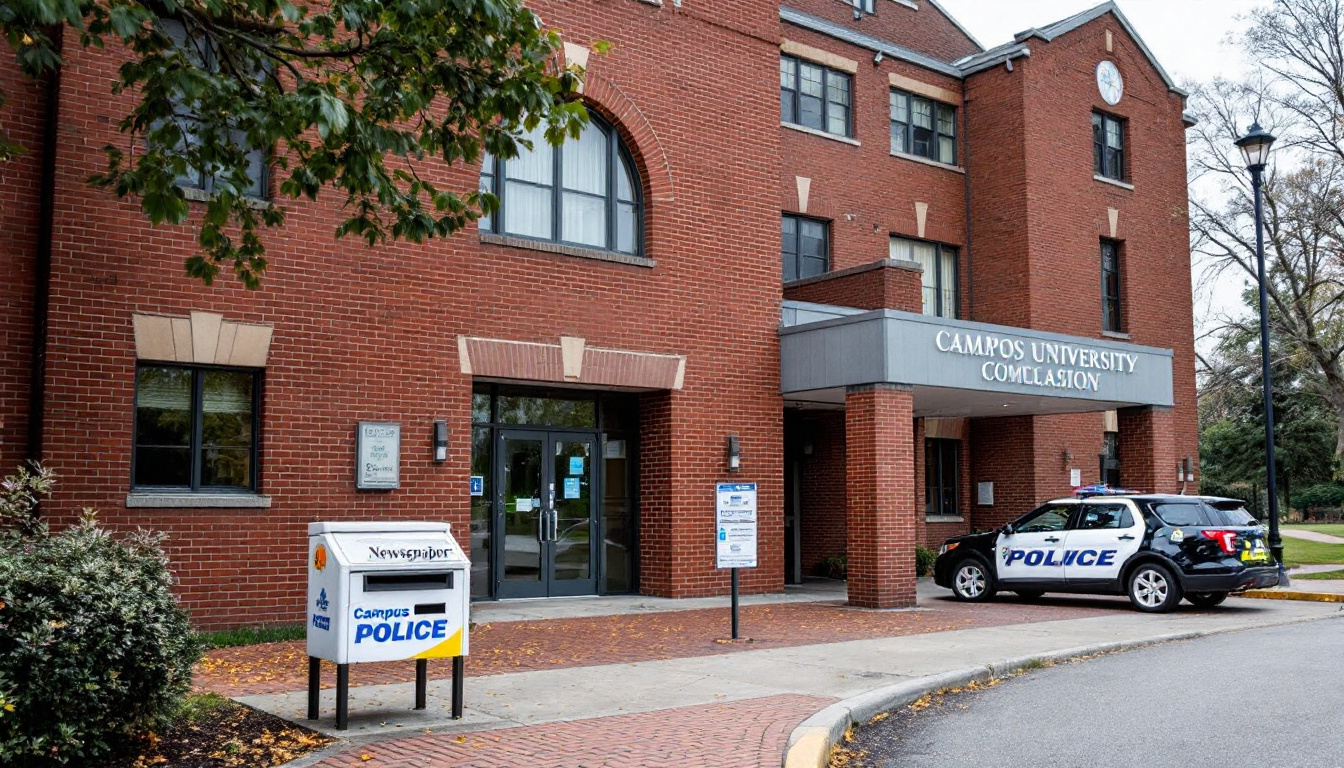
Franklin told university police the email was "quite incendiary and harmful to my safety." Hembrough and his faculty advisor were then ordered to appear at the campus police station for questioning. Officer Levi Cox conducted the interview, which lasted approximately 15 minutes.
Cox's own assessment, documented in the case record: "I do not believe this statement in and of itself to be harassing in nature." He closed the case on the spot. "After a couple questions he said he was going to close the case because it's not harassment," Hembrough said.
So a student journalist criticized a university communications office for asking to sit in on press interviews — a practice Franklin had described as "non-negotiable" — and the response was a police summons. At a public university. Funded by Illinois taxpayers.
The backstory makes it worse. The Alestle is an independent student newspaper that has spent the past two years doing exactly what student newspapers are supposed to do. In fall 2024, the paper published an investigation into University Housing practices. In March 2025, it ran a report on administrative "salary sweeps." The kind of reporting that makes bureaucrats uncomfortable and campuses more transparent.
SIUE's administration responded by tightening the leash. Franklin's communications office began requiring that a university media handler be present during any interview between Alestle reporters and university employees. When Hembrough pushed back in his September 3 email, the administration escalated from media control to law enforcement.
Marie McMullan, program manager for press freedom at the Foundation for Individual Rights and Expression, did not mince the assessment. "Siccing cops on journalists is something you'd expect to see from a tinpot dictatorship," McMullan said. FIRE and the Student Press Law Center have both demanded SIUE end its mandatory monitoring of student press interviews.
Chancellor James T. Minor issued a statement claiming "this has never been about free speech or freedom of the press." A public university official sent police after a student for writing a critical email about press access, and the chancellor says it has nothing to do with free speech. The email that triggered the police report was literally about press freedom. It contained the words "press freedom" and "freedom of speech." Officer Cox read it and closed the case in fifteen minutes.
Paula Bridges, the former executive communications director at SIUE, has since departed the university. The interview-monitoring policy she helped implement remains.
"Universities may not like it when student journalists speak truth to power," McMullan added. Hembrough's response was shorter: "We're going to keep reporting, and keep reporting critically."
The police investigation is closed. The case file shows a student who wrote an email and a director who called the cops. One of them had the law on their side.
It wasn't the one with the director's title.