
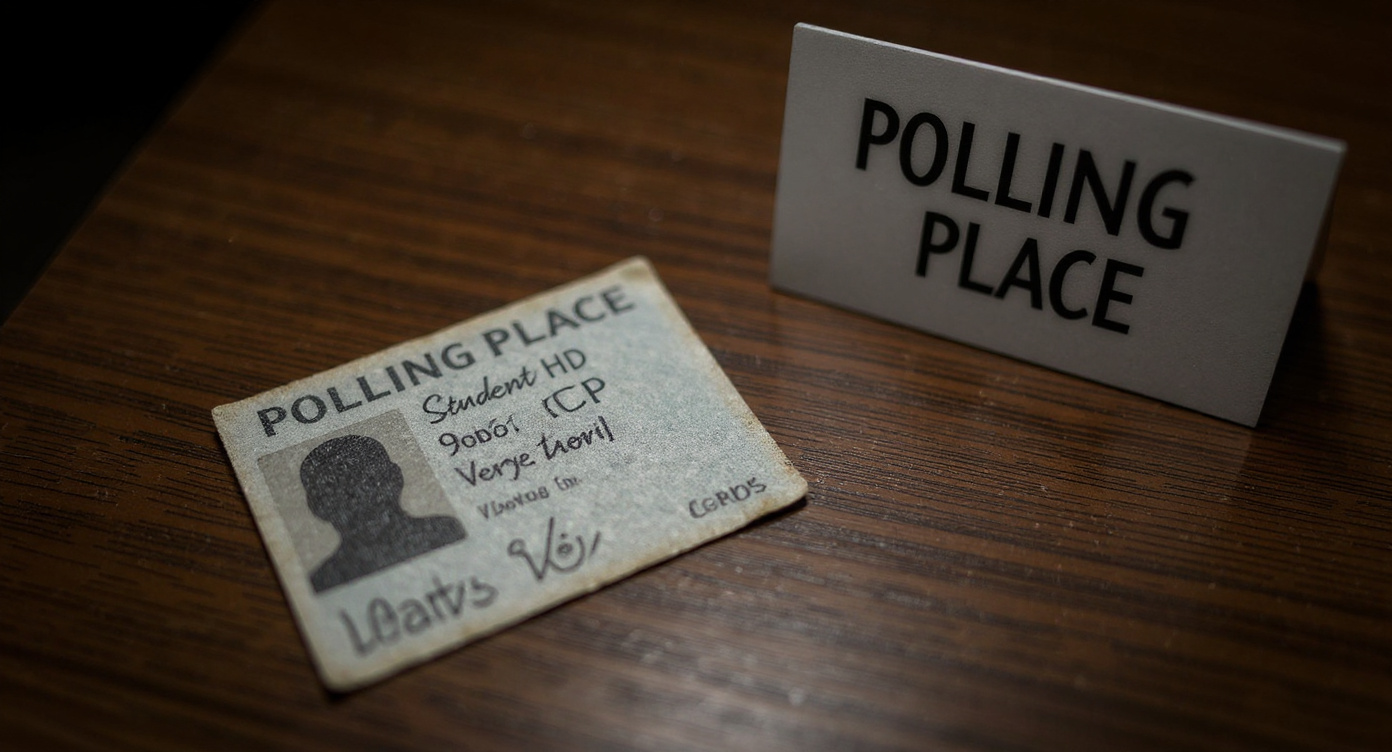
One justice dissented. One. Out of nine Supreme Court justices asked whether New Hampshire could require voters to show something other than a college dorm ID, exactly one thought that was unreasonable.
Her name is Ketanji Brown Jackson.
On Thursday, the Supreme Court granted an emergency application allowing New Hampshire to enforce its law banning student IDs as an accepted form of voter identification, less than two weeks before a closely contested midterm Senate race. The decision invoked the Purcell principle — the legal doctrine that federal courts shouldn't rewrite election rules at the last minute — and found that a lower court judge "did not point to anything that would justify deviating" from it.
The ruling reversed a lower court order from early October that had left the New Hampshire statute in place but blocked the secretary of state's guidance barring student IDs as a backup form of identification. In practice, that lower court ruling would have let students flash a campus card and cast a ballot in a state where they may have lived for all of six weeks. The Supreme Court said no.
New Hampshire Attorney General John Formella called it "an important victory for our efforts to defend those laws and prevent last-minute court orders from creating uncertainty for voters and election officials." The Republican National Committee, which filed a supporting brief, had argued the same point: the state passed a law through its legislature, the rules were clear, and a federal judge had no business muddying them weeks before an election.
"New Hampshire has a responsibility to protect the integrity of its elections and ensure that election laws are applied as written," Formella said.
The left's objection writes itself. They'll call it voter suppression, because that's what they call every law that requires a person to prove they are who they say they are. The Purcell principle exists precisely because courts recognized the chaos of changing rules mid-election — something the previous administration's allies treated as a feature, not a bug, in 2020.
Justice Jackson's dissent argued that "a case involving a court order like the one at issue here — which left the state election rule untouched — does not necessarily fall within the ambit of Purcell and its concern about federal courts 'changing the election rules' at the last minute." The technical distinction she's drawing is that the lower court only blocked guidance, not the statute itself. The practical effect of that guidance being blocked was that student IDs would still work at the polls. The Court's majority didn't buy the hairsplitting.
New Hampshire's contested Senate race makes the timing impossible to ignore. College towns in the Granite State — Durham, Hanover, Keene — have long been ground zero for the question of whether students who register at their campus address are really residents or just passing through. The law doesn't prevent students from voting. It requires them to use the same identification every other New Hampshire voter uses. A driver's license. A passport. A state-issued ID. The kind of documentation that proves you actually live somewhere.
Eight justices looked at that standard and found nothing worth blocking. One disagreed.
The number was nine to one.