
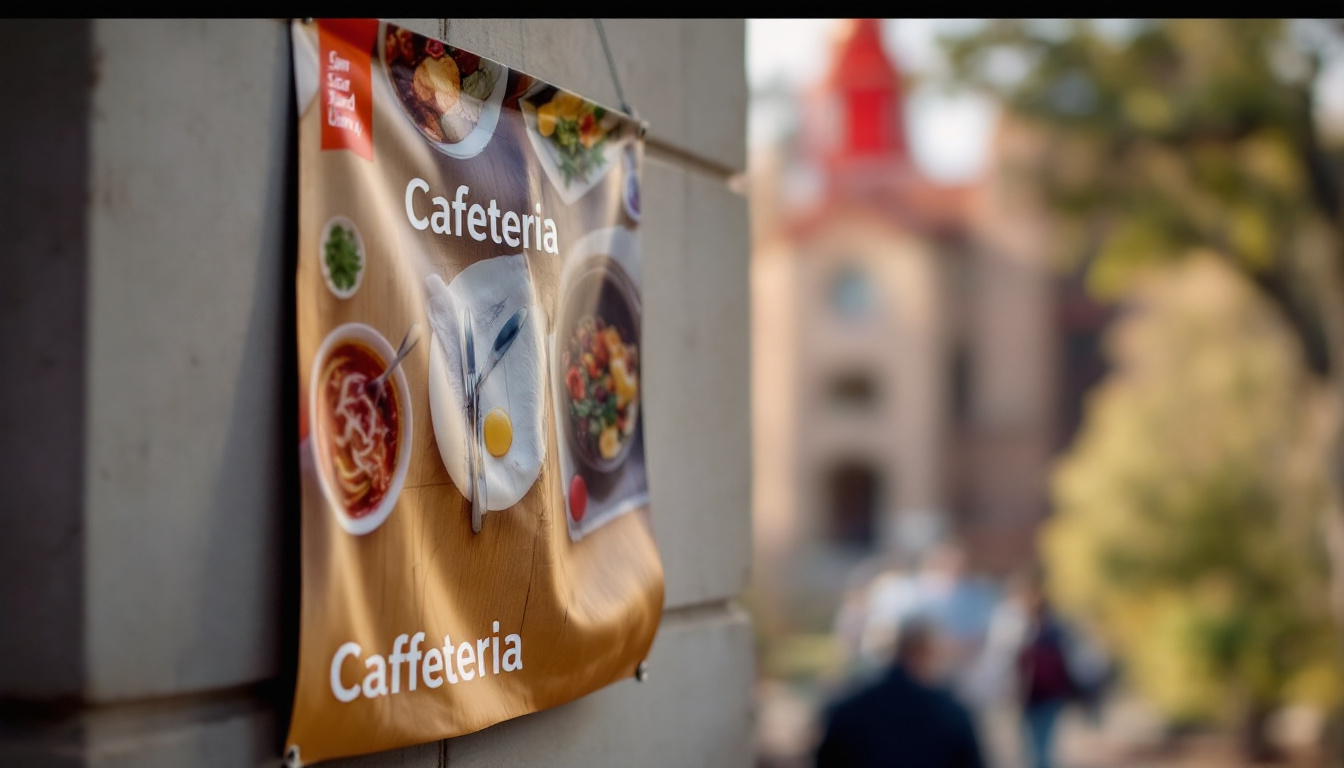
Billy Ramirez is a junior at Stanford University. He appeared in a photo with two other students at a campus cafeteria. When the photo showed up in a Stanford promotional banner, Ramirez was gone — replaced by a Black woman who doesn't exist.
Stanford didn't crop him out. They digitally transformed him into someone else entirely using AI.
The alterations were first documented by The Stanford Review, a student-run newspaper that obtained the original photos and compared them to the advertising banner produced by Stanford Residential & Dining Enterprises. The side-by-side images, which began circulating on social media around September 21, show three students in the original photo. In the promotional version, Ramirez — a male student — had been AI-altered into a Black woman. An Asian female student in the same photo had her face slimmed. A third student's smile was artificially changed.
Ramirez told American Wire News he was driving to school from his hometown when a friend sent him the comparison images. "I was immediately baffled," he said. "At first, I found it hilarious that they had used AI to completely change our appearances, including my race and gender."
The humor didn't last.
"Seeing my identity changed and being left out of the picture made me feel, in a way, silenced and erased," Ramirez said.
That quote deserves a second read — not because it's dramatic, but because of who's saying it. This isn't a conservative activist looking for a fight. This is the student whose face was in the photo. Stanford took a real person, decided he didn't fit the image they wanted to project, and digitally replaced him with a fabricated one. The student who was actually there felt erased. The person who replaced him was never real.
See the original and AI altered photos here
Stanford Residential & Dining Enterprises produced the banner. Not a rogue intern with a Photoshop license. Not a third-party vendor operating without oversight. A Stanford department created promotional material that altered the race and gender of real students without — based on Ramirez's reaction — their knowledge or consent.
The entire premise of diversity initiatives, as sold by institutions like Stanford, is that representation matters. Real people from real backgrounds, present and visible. What Stanford did is the opposite of that premise — they manufactured representation. They looked at three real students in a real photo and decided the image needed a Black woman, so they built one out of pixels and a male student's bone structure.
The phrase "digital blackface" has been thrown around loosely in online discourse for years, usually in contexts that don't quite fit. This one fits. Stanford used artificial intelligence to fabricate a Black woman from a male student's photograph for the purpose of making a dining hall advertisement look more diverse. That is not an exaggeration or a characterization. That is a physical description of what the images show.
Three students sat for a photo. Stanford's advertising department looked at what it had — and decided what it had wasn't diverse enough to publish. Rather than take a new photo, or use a different one, or simply run the image of three real students being real students, they fed it through an AI tool and changed a man into a woman and a non-Black student into a Black one.
Billy Ramirez was real. His replacement was generated. Stanford chose the generated version.