
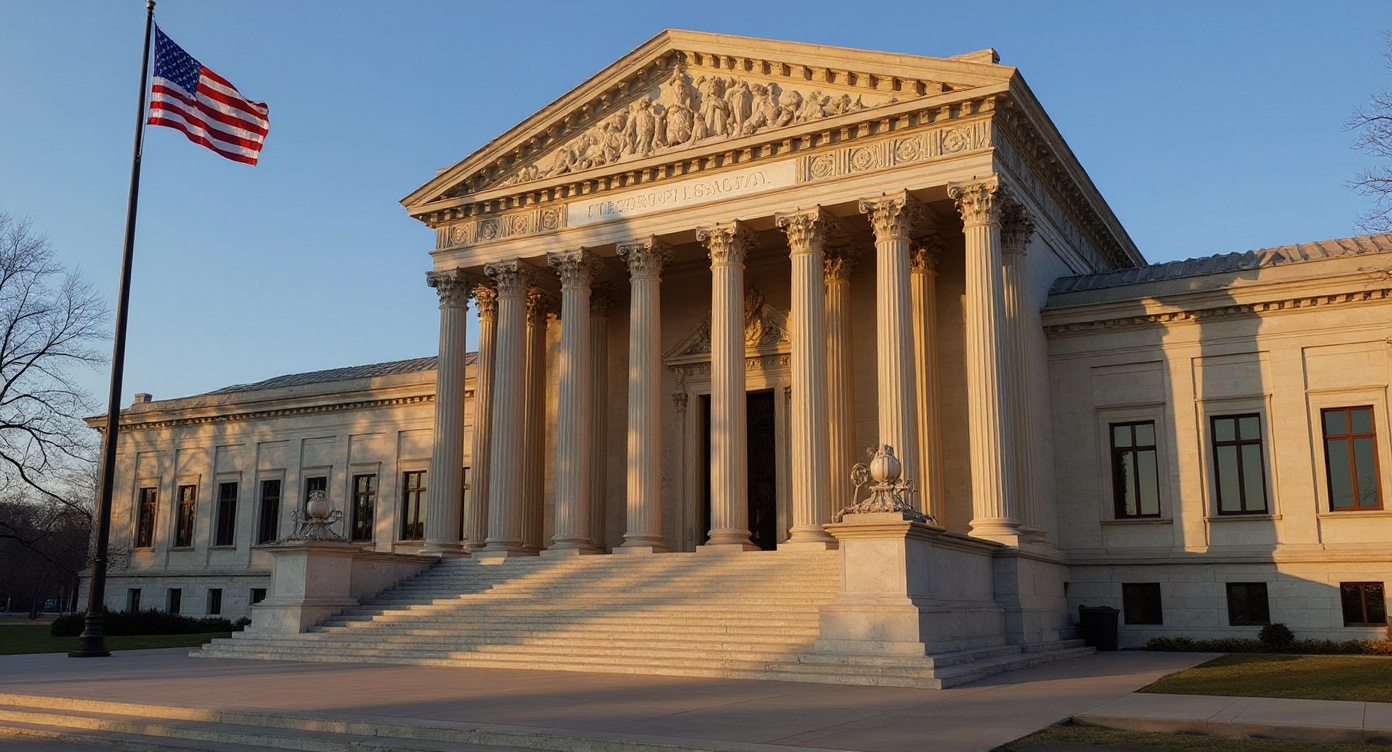
For ninety-one years, unelected bureaucrats at more than two dozen federal agencies operated under a legal shield that let them ignore the president who appointed them. On Monday, that shield evaporated in a 6-3 ruling.
The case was called Trump v. Slaughter, and it's exactly as satisfying as it sounds.
In March 2025, President Trump fired Rebecca Kelly Slaughter, a Democratic commissioner on the Federal Trade Commission, without citing specific cause. No "inefficiency, neglect of duty, or malfeasance in office" — the three magic words Congress embedded in the FTC's founding statute back in 1914. Slaughter was simply told her "continued service on the FTC is inconsistent with this Administration's priorities."
She sued. A lower court sided with her, pointing to the 1935 landmark case Humphrey's Executor v. United States — a ruling born from Franklin Roosevelt's own attempt to purge an FTC commissioner over ideological disagreements. That precedent had functioned as a firewall between the Oval Office and the regulatory state for nearly a century.
Chief Justice John Roberts, writing for the majority, drove a truck through that firewall. "Subordinates who exercise the president's power are subject to removal by him," Roberts wrote. He noted that the modern FTC enforces and administers some 80 statutes covering nearly every facet of the American economy. "The tasks it undertakes are 'the very essence of execution of the law,'" he argued, making the case that these agencies are performing executive functions while pretending they aren't accountable to the executive.
Then he delivered the kill shot: "If anything more is left of Humphrey's, the Court overrules it."
The ruling effectively strips "for cause" removal protections from commissioners at more than two dozen independent agencies. The FTC, the Equal Employment Opportunity Commission, the Federal Energy Regulatory Commission, the National Labor Relations Board, the Securities and Exchange Commission, the Merit Systems Protection Board, the Consumer Product Safety Commission — all of them now answer to the president the way the Constitution originally intended.
These aren't abstract institutions. The NLRB has spent decades tilting labor law toward unions and against businesses. The EEOC has functioned as an enforcement arm of progressive social policy. The FTC under Biden weaponized antitrust law against companies the left wanted to punish. For years, the commissioners running these agencies knew they couldn't be touched regardless of who won the election. That's over.
Justice Sonia Sotomayor read her dissent from the bench, a move reserved for occasions when a justice wants to publicly register maximum displeasure. Joined by Justices Elena Kagan and Ketanji Brown Jackson, Sotomayor warned the majority had given Trump "a power unknown even to the English Crown against which the Founders revolted." She wrote that "dozens of independent commissions are now likely to become purely executive agencies, shifting tremendous power over broad swaths of American life into the President's hands."
The English Crown comparison is doing a lot of heavy lifting there. Parliament restricted the Crown's removal power because the Crown was an unelected hereditary monarch. Trump won 312 electoral votes. There's a meaningful difference between King George III and a guy 77 million people chose, but constitutional nuance has never been Sotomayor's strong suit when the result favors a Republican president.
There was one notable exception carved out of the ruling. Federal Reserve Governor Lisa Cook — whom Trump also tried to fire, over allegations of mortgage fraud she has denied — gets to keep her job for now while her case proceeds separately. The Court treated the Fed differently, acknowledging its unique role in monetary policy and the financial system. Roberts was careful not to blow up the bond market on the way to fixing the administrative state.
The real significance here isn't about one FTC commissioner. It's about what the regulatory bureaucracy became over ninety-one years of insulation from democratic accountability. Congress created agencies, stacked them with likeminded appointees, and built statutory walls to keep future presidents from cleaning house. The result was a government inside the government — staffed by people who couldn't be fired by the person voters actually chose, and who knew it.
That arrangement worked beautifully for the people inside it. For the rest of us, it meant these agencies operated with the permanence of an institution and the accountability of none.
Roberts didn't just rule that Trump can fire one commissioner. He ruled that the entire premise — that Congress can create executive officers and then forbid the executive from removing them — violates the separation of powers. The 1935 precedent wasn't modified or narrowed. It was overruled.
Sotomayor says the majority "reshapes our government." She's right about that part. The question is whether the shape it was in — a sprawling bureaucracy accountable to nobody who faces voters — was the one the founders had in mind.
The answer has been obvious for decades. It just took ninety-one years to get six justices to say it out loud.