
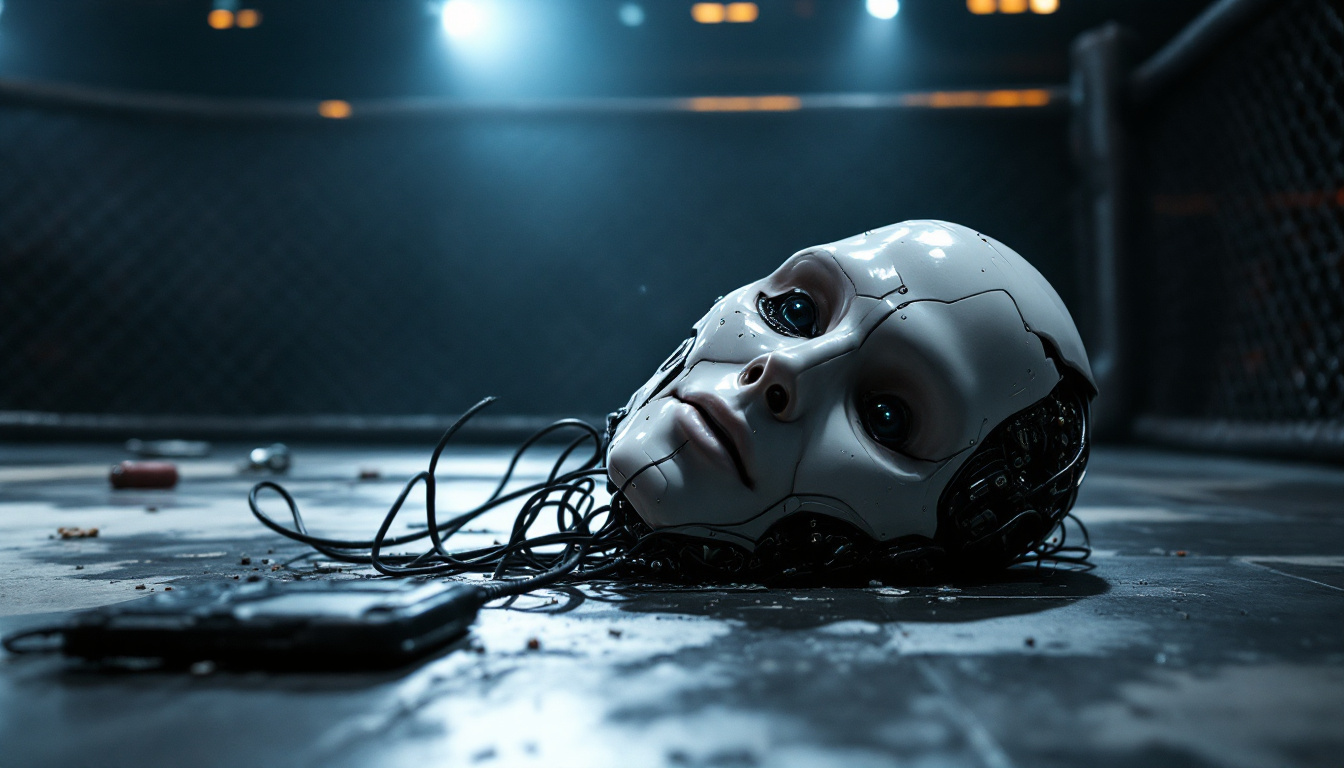
Fighter Frankie LaPenna took a kick from a Chinese-built humanoid robot capable of delivering 850 pounds of force and got launched across a steel cage in San Francisco. Then he got up, charged back in, knocked the robot off balance, and tore its head off with his bare hands.
The fight was the second robotics entertainment tournament staged by a company called REK, which pairs human pilots operating robots in real-time through VR gear and gamepads with onboard AI that handles balance and trained combat movements. The human pilot directs the action. The AI keeps the machine standing. The result looks like something from a movie that hasn't been made yet, except the punches are real and the content creator nursing a injured hand afterward was very much not acting.
LaPenna faced three robots across three separate bouts. The T800 models stood roughly six feet tall and weighed approximately 187 pounds — not a sparring dummy, not a tech demo, a genuine opponent throwing punches and kicks under the direction of a remote human operator. REK's technology partner, Reflex Arc, handled the robot operation side. The smaller Unitree G1 humanoid also appeared in the event, though the T800 bouts generated the footage currently burning through every algorithm on the internet.
REK CEO Cix Liv confirmed the company required LaPenna to wear protective motorcycle-style gear and gloves despite his initial reluctance. Smart call. When your opponent can deliver 850 pounds of force through a single kick, the line between "entertainment" and "industrial accident" gets uncomfortably thin.
The safety precaution tells you something the promotional clips don't. This isn't professional wrestling with circuit boards. The robots hit. The pilots controlling them are competing to win. And the AI handling balance means the machines don't stumble the way a human fighter would after absorbing a combination — they reset, recalibrate, and come back centered. LaPenna figured out the workaround the old-fashioned way: forget the body, go for the head. Literally.
REK's first simulator championship generated 3,670 matches, which means the talent pool of robot pilots is already deeper than most people realize. The jump from simulator to live humanoid combat happened fast. The jump from live humanoid combat to something that fills arenas is already happening faster.
The T800 models were built by EngineAI, a Chinese robotics company, which raises the question nobody in San Francisco seemed interested in asking: when American entertainment companies are sourcing their combat robots from Chinese manufacturers, who exactly is learning more from the experience? REK gets a viral moment. EngineAI gets real-world combat data on how its humanoid platform performs under stress, absorbs impact, and fails — specifically, how a six-foot robot loses its head when a motivated human decides the fancy kicks aren't going to be the last word.
Every defense contractor on the planet watched that clip this week. The 850 pounds of force wasn't the interesting number. The interesting number was how many seconds it took LaPenna to find the structural weakness.