
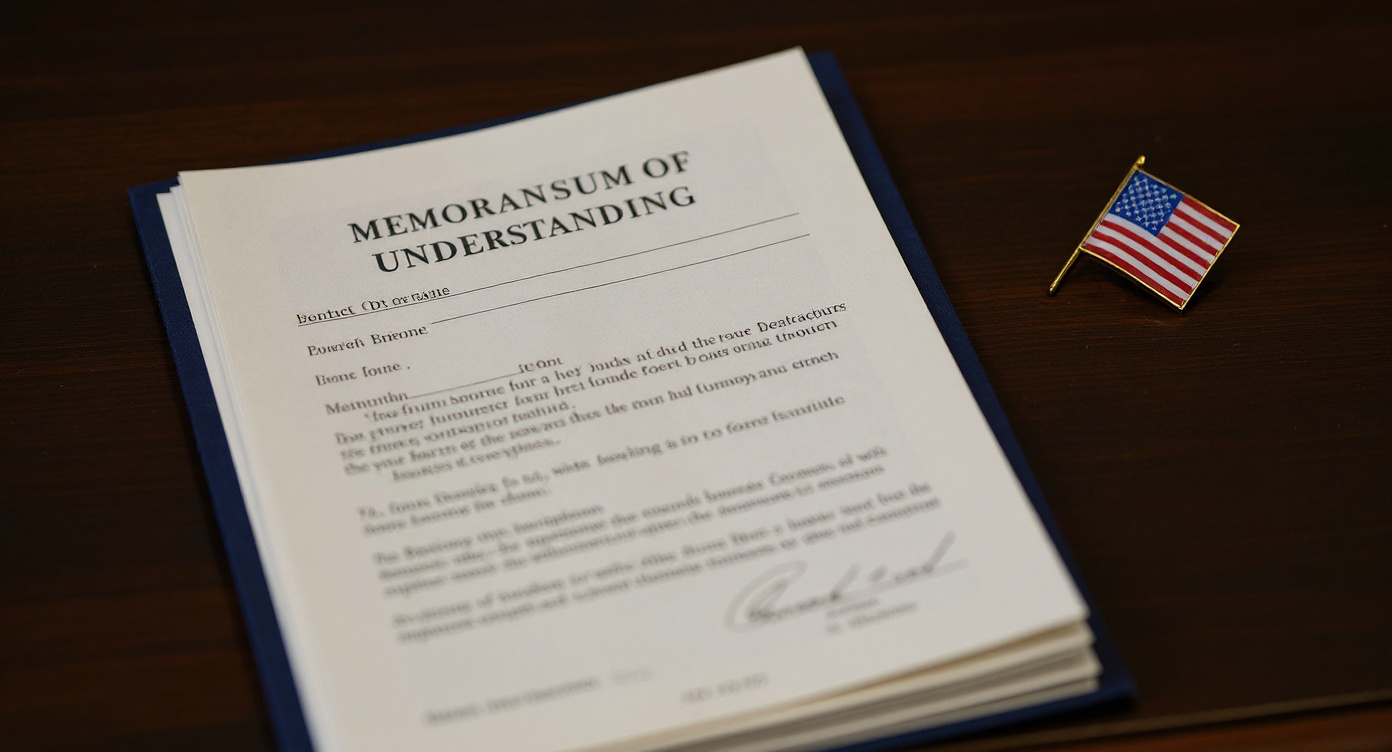
President Trump just ended a shooting war with Iran, reopened the Strait of Hormuz to commercial shipping, got the Islamic Republic to reaffirm on paper that it will not develop nuclear weapons, and secured international oversight over Iran's enriched uranium stockpile — all in a page and a half. Meanwhile Barack Obama's 2015 JCPOA ran hundreds of pages, was negotiated in secret, sold with lies, never received a Senate vote, and gave Iran $150 billion with barely a speed bump on their nuclear program.
But sure. Tell us how Trump lost.
Here's what's actually in the Islamabad Memorandum of Understanding, because the media has been too busy running "Trump surrendered" chyrons to explain it. The 14-point document, now publicly released and signed by both Trump and VP Vance, accomplishes the following: immediate and permanent termination of military operations across all fronts including Lebanon. Reopening of the Strait of Hormuz — through which roughly 20% of the world's oil flows — with demining and removal of military obstacles within 30 days. Iran's formal reaffirmation that it will not develop nuclear weapons. A specific framework for downblending Iran's enriched uranium stockpiles under direct IAEA supervision on Iranian soil. And a 60-day negotiating window to lock in a final comprehensive agreement.
That's not nothing. That's a ceasefire, an open waterway, a nuclear commitment, and international inspectors on the ground — in a document short enough to actually read.
Now, the Republican criticism isn't coming from nowhere, and we're not going to pretend it is. Sen. Thom Tillis called the agreement "doomed to fail." Sen. James Lankford correctly pointed out that an executive agreement rather than a Senate-ratified treaty means the next Democrat president can torch it on day one — exactly what Trump did to Obama's JCPOA. Sen. Lindsey Graham said it "sounds awful." Fox News contributor Marc Thiessen compared the $300 billion reconstruction fund to "offering the Marshall Plan while the Nazis were still in power."
These are legitimate concerns and they deserve serious answers, not dismissal.
The $300 billion reconstruction fund is the biggest sticking point, and understandably so. Handing Iran's regime a financial windfall sounds about as smart as giving your car keys to the guy who just robbed your house. But here's the context the critics are leaving out: that fund, along with full access to frozen assets, is tied to the 60-day negotiating process. Iran gets immediate oil sales and sanction waivers upon signing — that part is real and worth scrutiny. But the larger financial picture gets resolved in the final deal. The framework is a starting point, not a blank check already written.
CIA Director John Ratcliffe reportedly told Axios that intelligence agencies have "serious doubts about Iran's willingness to comply." That matters and should keep everyone honest during the 60-day window. The deal is only as good as the enforcement mechanism built around it, and that work isn't done yet.
Here's what the "Trump surrendered" crowd keeps skating past. The war is over. American forces are no longer in harm's way around Iran. The Strait of Hormuz — closed since early April, costing the global economy billions — is reopening. Iran has committed to IAEA oversight of its most dangerous nuclear material. And Trump is daring you to read every single word of the document out loud and judge it yourself.
When's the last time any president did that? Obama's deal was negotiated in secret, announced as a fait accompli, and defended with the infamous line that critics were just "warmongers." Trump at 80 years old stood up and said "here it is — read it."
The 60-day window is where this deal lives or dies. Iran has every incentive to stall, reinterpret, and maneuver. The administration needs to go into those final negotiations with eyes open and demands non-negotiable. The critics are right that the framework alone isn't victory. But a ceasefire, an open strait, IAEA inspectors, and a nuclear reaffirmation aren't surrender either.
It's a beginning. Whether Trump turns it into something durable is the only question that matters now.