
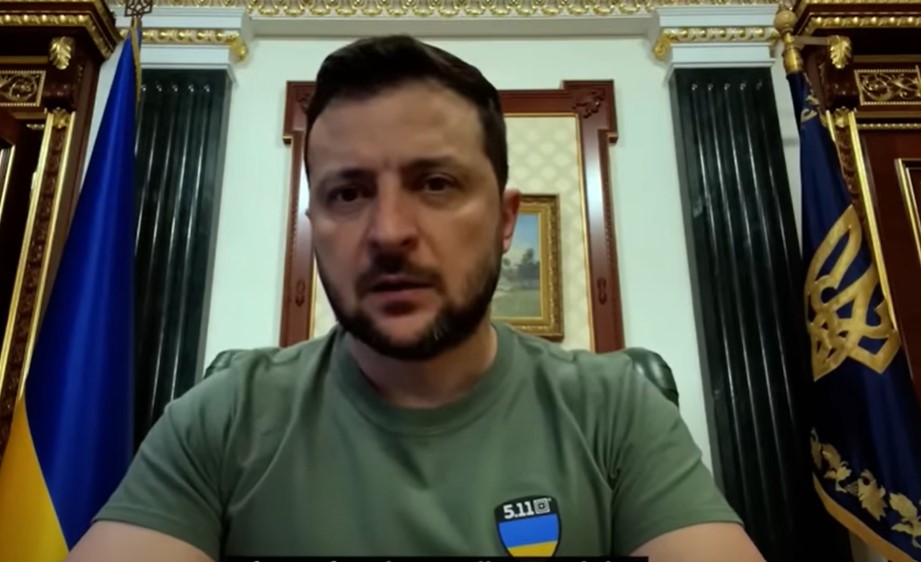
On September 13, Volodymyr Zelensky — the man Washington keeps calling a champion of democracy — imposed 10-year sanctions on his former press secretary, Yulia Mendel. Her crime wasn't espionage. It wasn't treason. She went on Tucker Carlson's show and said what she called "an open secret" about the Ukrainian president's drug use.
Ten years. For talking.
Mendel served as Zelensky's official spokeswoman from 2019 to 2021. She wasn't some fringe activist or Russian operative. She stood behind his podium, answered questions on his behalf, and represented his administration to the international press. Then she left, and eventually started saying things Zelensky didn't want said.
The sanctions targeted Mendel and nine others, accusing all ten of "spreading Russian propaganda." That's the charge Zelensky's government reaches for whenever someone says something inconvenient. In Mendel's case, the inconvenient thing was describing the president's alleged cocaine use to an audience of millions.
"All these people are talking about cocaine, yes," Mendel told Carlson. She described Zelensky disappearing into the bathroom for 15 minutes before interviews, then emerging "like a different person." The claims had circulated in international media as early as May 2026, but Mendel's interview brought them to a Western audience that actually pays attention.
Mendel didn't back down after the sanctions hit. She posted on Facebook that "sanctions against Ukrainian citizens are unconstitutional, just like many of Zelenskyy's other decisions." On Twitter, she went further: "Volodymyr Zelenskyy is a tragedy for Ukraine."
The Ukrainian government's response to these allegations has followed a pattern that should look familiar by now. They didn't produce a drug test. They didn't issue a medical report. They didn't offer a single piece of evidence contradicting Mendel's account. They sanctioned her. That's the rebuttal — not facts, but punishment.
Mendel's name has also reportedly been added to the Myrotvorets database, a Ukrainian "kill list" that publishes personal information of individuals deemed enemies of the state. The same database that has previously listed journalists and political figures who questioned Kyiv's official narratives. Social media figure Mario Nawfal flagged the sanctions on September 13, noting the speed with which Zelensky moved against someone from his own inner circle.
Zelensky co-founded Kvartal 95 Studio, the entertainment company that launched his career before politics. He built a public image as a comedian who stumbled into the presidency, a relatable everyman fighting the big bad Russians. That image requires a certain amount of cooperation from the people who saw him up close. Mendel stopped cooperating.
The word "propaganda" does a lot of heavy lifting in Kyiv these days. It covers everything from actual Russian disinformation operations to a former employee describing what she personally witnessed in the presidential office. When a government defines criticism as propaganda and punishes it with decade-long sanctions, the word they're looking for isn't "democracy."
Washington has spent years telling us Zelensky deserves our money, our weapons, and our unwavering support because he represents democratic values under siege. His former press secretary just got sanctioned for speaking to a journalist. Those two things don't live in the same sentence.